On the Nakba and the flight to al-Tantura:
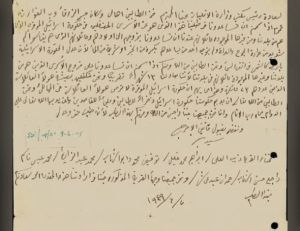
“I remember that before the war we were sleeping, when my grandfather came and started waking us up. When we did not wake up, he began pulling us by the hair, telling us, ‘Get up, now the Zamareen people are coming and they will kill us.’ We walked along the shore, alongside the sea, until we reached al-Tantura. There, we met a man named Muhammad Hassan, who knew my grandfather Dheeb. He told him, ‘This house is yours.’ It was a large house, and we stayed there until the war came. They brought us and put us all together in one group beside the sea. The Jews dug a large pit and made us sit there cross-legged, and they began bringing the dead and throwing them into the pit. We could see everything, but we could not say anything.”
On their return to Jisr al-Zarqa:
“After some time, Shamshum and Ibn Ghazal intervened and asked for the people of Jisr al-Zarqa to return to the village, because it became clear that it was not the people of Jisr al-Zarqa who had killed the watchman and taken his weapon. It turned out that a Jewish man had killed him. Shamshum said, ‘We found out who killed him. The one who killed him was a Jew, not an Arab.’ We all returned to Jisr al-Zarqa. The children and women returned, while the men remained in prison, including my grandfather Dheeb, my father, and my uncle. They remained there for nine months, and then they were released.”
On her early marriage:
“I got married when I was 14 years old. I would cry and say to my father, ‘Dad, I’m still young. How can you marry me?’ But he would not listen and remained stubborn. I was young when I became pregnant. Imagine, a child carrying a child in her womb, while carrying the burdens of the family—‘Go cook, go knead the dough over the firewood.’ From the day I opened my eyes to the world, I have lived in oppression. My whole life has been oppression. My father married me off when I was young.”
On life in the past:
“Life was difficult, but when compared with the progress of life today, those days were better because the whole village was like one household. It is true that there were no hospitals or even the basic necessities of life, but the closeness between people gave life a special character. There was no violence, no killing. I don’t know what one person was killed for, or what another person killed for.”