Mr. Hamdan Youssef Rashwan
1958: The Beginnings and Reliance on External Services
Archival documents indicate that medical services in Jisr az-Zarqa were extremely limited in the late 1950s:
• Infrastructure: A maternal and child health station (“Tipat Halav”) was opened. It operated only three days a week and was staffed by two nurses.
• Medical staff: Official medical care was limited to one monthly visit by a government doctor to the station. At the same time, a private doctor visited the village twice a week, but there was no permanent facility or dedicated clinic for receiving patients.
• General situation: The village’s residents relied mainly on the nearby town of Binyamina to receive services from the General Sick Fund (Kupat Holim), creating a significant burden due to the need to travel, as no local medical infrastructure was available.
2. March 1969: A Major Turning Point and the Opening of the First Permanent Clinic
According to an article published in the Hebrew press on March 27, 1969, the village experienced an important institutional development:
• The event: The General Sick Fund (“Kupat Holim”) opened the first official permanent medical clinic in Jisr az-Zarqa, in the presence of representatives of the fund’s administration in the Sharon District.
• Facilities: The clinic was established in a three-room building that was fully equipped with the necessary medical equipment and supplies to provide adequate primary healthcare.
• Service system: A doctor from Binyamina was assigned to visit the village clinic and provide medical consultations five days a week. This marked the end of the period in which residents were entirely dependent on constant travel outside the village to obtain basic medical treatment.
3. March 1982: Population Growth and the Demand for a Central Medical Complex
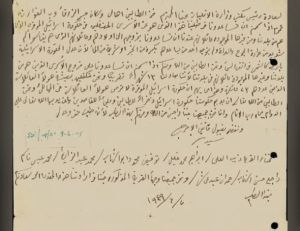
Official correspondence exchanged on March 12, 1982, between the Sick Fund administration and the head of the local governing committee in Jisr az-Zarqa documents the point at which the clinic built in 1969 reached its structural capacity.
• The crisis: Rapid population growth had brought the number of residents insured for healthcare in the village to approximately 4,000, while they were still being served by only one doctor.
• Administrative obstacles: The local authorities requested the addition of a second doctor to accommodate the growing number of patients. However, the Sick Fund administration declined, citing the lack of available space or additional rooms in the existing clinic building, resulting in severe overcrowding.
• Archival decision on the solution: A joint meeting between the administration and the local authority resulted in a strategic decision to allocate a one-dunam plot of land for the construction of a new, modern central medical complex suited to the village’s growing needs.**
The correspondence concluded with a request from the local authority to hand over and prepare the land immediately so that the engineering plans could be drawn up and work could begin.