Mr. Hamdan Yusuf Rashwan
The late Ismail Ahmad Abd al-Fattah al-Zayit, known by the nickname “Ismail al-Jariya,” was one of the prominent figures and influential historical personalities in the history of Jisr al-Zarqa (Arab al-Ghawarna). His life story and family history reflect the social, economic, and political transformations that the village underwent across generations.
📌 Personal and Professional Milestones
- Birth and death: He was born in 1888, during the late Ottoman period, and lived until 1963.
- Economic activities: He began his working life as a fisherman, the traditional occupation of the coastal and Jisr al-Zarqa communities. He later moved into agriculture and subsequently worked as a butcher. He was known for his considerable economic success and was regarded as one of the wealthiest residents of the village during his time.
- Residence: He lived in the historic family home, which was passed down through generations and later inhabited by his son Salim (Abu Khamis).
👥 Family Connections (First Generation)
- Mother: Amina, wife of Ahmad al-Zayit.
- Wife: Zainab Hussein Issa Shukhaidim Jarban (born in 1890), the aunt of “Abu Arab.”
Brothers and Sisters:
- Ali al-Ahmad Abu Zaid: Born in 1872. His wife was his cousin, Maryam al-Mahmoud al-Zayit.
- Muhammad Ahmad Duhayman.
- Hamda (Umm Darwish): Born in 1888.
- Nuwayr: Born in 1898. She was the mother of “Abu Arab,” Mahmoud “Abu Rashwan,” and Ahmad al-Masri “Abu Hassan.”
📐 Children and Family and Political Legacy (Second Generation)
1. Awad (Abu Muhammad)
- Born in 1918.
- During the 1960s, he ran one of the village’s small commercial establishments, owning a grocery shop.
2. Salim (Abu Khamis) – Trade Union and Political Figure
- Born on April 25, 1921, and died on November 26, 2019. His wife was Amina Hassan Rashwan.
- During the 1960s, he co-managed a café with his brother Hassan.
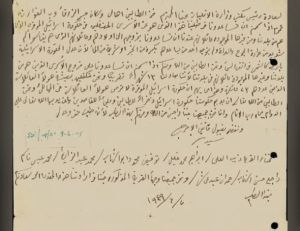
- Early trade union role: In the 1950s, he emerged as a labor leader and served as the “Arab Secretary of the Brit” (the Arab Workers’ Alliance in the Galilee), affiliated with the Executive Committee of the Histadrut and the Mapai Party. He was responsible for organizing Arab workers’ trade union and political affairs and establishing branches for them, including the branch in Acre, across the Haifa and Northern Districts.
- Local political role: He served as Deputy Head of the Jisr al-Zarqa Local Council for an extended period, from 1974 to 1983.
Haj Salim Ismail Jarban (Abu Khamis), one of the oldest residents of his hometown of Jisr al-Zarqa, passed away at approximately 98 years of age.
Abu Khamis was one of those rare individuals whose life formed a direct human connection between different historical eras in the country: the Ottoman period, the British Mandate, and the post-1948 era.
His father was among the last people to have witnessed the crocodiles that once inhabited the river named after them. Abu Khamis himself was born, raised, and grew up playing in the Kabara wetlands, known as the “Land of a Thousand Springs,” before they were drained. He grew up alongside the old watermills, where wheat, water, and stories once flowed together.
His life connects three stages in the history of the same tribe: the depopulated village of Khirbet Kabara on the slopes of Mount Carmel, the Arab al-Ghawarna community on the coastal plain, and the modern village of Jisr al-Zarqa.
Abu Khamis left behind a distinguished family and a legacy of good remembrance.
May God have mercy on him and grant his family patience and solace.
3. Hassan (Abu Hussein) – Known as “Juha”
- Born in 1923 and died on November 26, 2020, exactly one year after the death of his brother Salim.
- His wife was Raja Rajeh Hassan Ibrahim Abu Shihab.
- During the 1960s, he joined his brother Salim in managing the family café.
This biography constitutes a rich source of oral and historical documentation, connecting the families of Jisr al-Zarqa—the al-Zayit, Jarban, Rashwan, and Abu Shihab families—and documenting the early labor and political movements in the region.