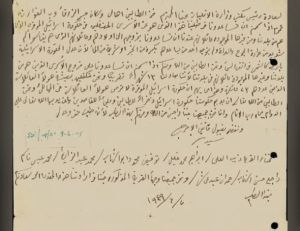
“Some of the residents of Jisr al-Zarqa came from Kafr Qaddum, and I learned this during my travels through many countries while asking about the origins of the people of Jisr al-Zarqa, particularly my family, the ‘Amash family. I eventually reached the Nablus Governorate, where I met an elderly man from the area. He told me that the ‘Amash family originated from Kafr Qaddum. There were two brothers who may have been involved in a blood feud and had to leave the village. When we asked about them, we were told that they had reached the area of the Ghawarna, which is known to be Jisr al-Zarqa, and settled there in tents. It is worth noting that some people were still living in the caves and grottoes of Kabara, and during the winter we used to live among them in those caves.”
On their remaining after the Nakba: “Everyone knows that the Zionist Stern Gang gathered the people in the mukhtar’s courtyard. A man from Binyamina came and said, ‘Stay here in peace and work, you and your children.’ This had a purpose, which I came to understand later. A Jewish man once told me, ‘We left this village for you to serve us; otherwise, who would have plowed the land?’ The village changed greatly after it lost much of its resources. After the swamps were drained, there were no longer any buffalo to plow the land, and there was no land left.”
“After the Nakba, if we wanted to travel outside the village, we needed a permit from the military governor. We would obtain one only after being humiliated and insulted. In addition to the humiliation associated with the name ‘Ghawarna,’ the name was uttered as though we were an inferior class or belonged to another world. This continued until the late twentieth century.”