On the situation in the village:
“There is no doubt that the village is being subjected to a deliberate and systematic plan of constriction. As everyone knows, it is the only village located on the Mediterranean coast, so we had to think about dismantling this plan for the benefit of the people of the village. Jisr al-Zarqa is a small and vulnerable village by every measure: a large population, a limited area, and surrounded by the river, the sea, the water canal, Caesarea, and the coastal road.”
On the segregation wall with Caesarea:
“The barrier makes it difficult for residents who work in Caesarea to reach their workplaces easily and has undermined the morale and hopes of the residents. He also says that the barrier made them feel that the residents of Caesarea do not regard us as human beings and want to conceal our existence.”
On the Al-Fayrouz project and the new residential neighborhood:
“The project is part of Jisr al-Zarqa, and the streets proposed within it are Arab streets bearing Arab names, as determined by the Naming Committee. We appeal to the residents to take advantage of this opportunity, but they do not respond. Because of rumors, some of them even destroyed their certificates of eligibility. This is not northwest Caesarea. Everyone who comes here must think about this.”
On the educational renaissance:
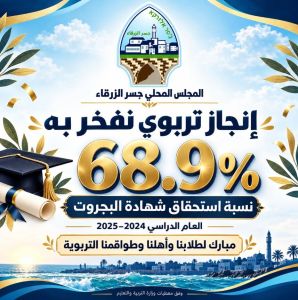
“It is no secret that there has been a major educational renaissance. Jisr al-Zarqa used to have 38% of students eligible for the Bagrut certificate, whereas today the figure has reached 71%. We also have more than 30 male and female doctors, all of whom work in various centers and return to Jisr al-Zarqa.”
On crime and violence:
“This year, we lost four young men, and this is considered a major loss. It leaves one wondering what can be done to curb this phenomenon. As a local council, we had an ideal program and held regular meetings with mosque imams and community mediators, as well as efforts to resolve all disputes.”