Sami Al-Ali
Perhaps this is the most frequently asked question in the context of the story of Jisr al-Zarqa, and the most prominent question shared by historians, researchers, documentarians, and even guests and tourists who have visited the village. I have answered it clearly during my lectures, presentations, and meetings about the history of Jisr al-Zarqa, on numerous occasions and through various platforms that need not be mentioned here.
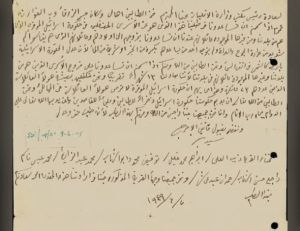
Here, however, I provide a detailed answer based on oral testimonies from leaders and prominent figures of the village, as well as historical documents belonging to the PICA settlement company, which shed light on some of the motives of the Zionist movement and its objectives in keeping Jisr al-Zarqa in its location on the coast.
After conducting an in-depth examination of the events in the history of Jisr al-Zarqa, and reviewing documents, information, and testimonies, I reached a number of conclusions regarding the factors that contributed to the survival of Jisr al-Zarqa on the kurkar ridge along the Carmel coast:
First: In 1948, the population of Jisr al-Zarqa (the Ghawarna Arabs, or Al-Zarqa) numbered no more than approximately 400 people. They lived under extremely difficult environmental and living conditions in the Kabara swamps and the Al-Zur plain, following a semi-Bedouin way of life in tents and huts made of sheet metal and wood.
Second: The wisdom and strategic judgment of the village mukhtar, Dheib Al-Ali Shkheidem, together with the heads of the families, played an important role. They considered it essential to protect women and children and to avoid forced displacement by every possible means, particularly after witnessing and hearing about the killings, destruction, and horrific massacres committed by Zionist militias in neighboring Palestinian villages.
“A number of Zionist soldiers came to us, and one of the officers said that if we wanted to live here, we had to surrender and not resist. So I asked the young fighters in the village, who were few in number, to leave and join their brothers in the Carmel Triangle—such as Zamarin, Ijzim, Ein Ghazal, and Tantura—and in the northern villages. In return, the Jews handed us only a very small number of rifles, while we hid the rest. We were afraid that the village would be occupied and that we would be expelled or killed, as had happened to our people in the Carmel villages. In this way, we saved the people of the village from displacement and killing, and we deceived the Jews.”
(From the testimony of Dheib Al-Ali and his son Khalil Dheib Jarban.)
Third: Documents from the PICA settlement company and representatives of the British Mandate indicate that a parcel of land on the kurkar ridge was allocated to the “Ghawarna Arabs” as a gesture of “goodwill,” in return for some of them working on the project to drain the Kabara swamps. Following negotiations between PICA, the British Mandate authorities, and representatives of Jisr al-Zarqa concerning land ownership, it was agreed to allocate approximately 1,600 dunams to the families, after more than 15,000 dunams had been confiscated.
Fourth: A report by Zionist intelligence personnel at the time stated that the “Ghawarna Arabs” posed no security threat and offered no significant resistance or opposition. The report described them as a vulnerable population, most of whom were male and female laborers, who did not constitute a danger to the lives of Jews in the neighboring settlements and had not engaged in any notable hostile activities.
Fifth: The mukhtar of the settlement of Zikhron Ya’akov and Jewish landowners in the area recommended to the Zionist militias that the villagers be kept because their labor was needed on the agricultural land, particularly if the settlers themselves were to join the fighting.
“Don’t bother with them. Let them stay so they can work the land while we go off to fight.”
This statement appears in testimonies given by some residents of the village.
Sixth: There were broader directives from senior Zionist movement leaders to preserve certain Palestinian villages and towns for various reasons, with each village and city having its own particular circumstances. These directives primarily served the Zionist movement in its dealings with the international community, helping to avoid political and legal criticism and presenting a more favorable image of the emerging state. At the same time, the survival of these villages could obscure the massacres, killings, expulsions, and destruction that had affected other towns and villages in the surrounding region.
Historian Adel Manna’ discusses in his book Nakba and Survival the various factors, reasons, and decisions that contributed to the survival of Palestinian villages and towns after the Nakba.
This means that the survival of Jisr al-Zarqa, in its strategic location on the Mediterranean coast as the last Palestinian village to remain standing after the Nakba of 1948, was not solely the result of the intervention of the mukhtar and the farmers of the Zikhron Ya’akov settlement, nor was it simply the result of “goodwill” or a Zionist-British Mandate allocation granted in exchange for labor in draining the swamps.
Rather, it was the result of a combination of factors, causes, and circumstances that came together and increased the chances of Jisr al-Zarqa surviving and remaining on the historic Palestinian coast.
(From the book: Jisr al-Zarqa – Testimonies in Confronting Historical Narratives)