One of the massacres of ethnic cleansing carried out by the Haganah militias in Palestine, it took place in May 1948 in Tantura, south of Haifa. Approximately 280 Palestinians, most of them men, were killed and buried in mass graves. The village was subsequently destroyed entirely, and those who survived were displaced beyond the borders of the state of Israel.
An Ancient Village
Tantura is an ancient Palestinian village whose history dates back to the 13th century BCE. The Canaanite town of “Dor” stood on a small, prominent hill overlooking the Mediterranean Sea. The site took the form of a tantur, meaning an elevated place shaped like a funnel or conical hat, approximately 24 kilometers south of the city of Haifa.
The village occupied a strategic location midway between two of Palestine’s major urban and commercial centers, Jaffa and Haifa. This made it an important link in internal commercial activity. Its prosperity was further supported by a railway station on the coastal line, as well as its harbor, which provided access to maritime trade. These factors made the village a target for occupation.
By the end of May 1948, Tantura, which covered an area of approximately 14,520 dunams, had become a largely destroyed village, with only a small number of its historic landmarks remaining. Its population, which had exceeded 1,500 inhabitants, had been displaced, leaving the village largely emptied of its people.

The Israeli Invasion
On May 9, 1948, the occupation authorities, including local commanders of the armed Haganah organization, held a meeting to discuss the Arab (Palestinian) villages that had not yet been brought under occupation but were located within the area designated as the “State of Israel” under the partition plan approved by the United Nations in 1947. Tantura was among these villages. The meeting resulted in a decision to expel the inhabitants of these villages or subjugate them.
Indeed, one week after the declaration of the establishment of Israel, members of the Haganah’s 33rd Battalion, known as the Alexandroni Brigade—specifically its 3rd Battalion—launched an attack on Tantura on the night of May 23, 1948. Led by Dan Epstein, the attack came from all directions. The entrances to the village and the roads leading to it were blocked to prevent support from reaching the village from neighboring communities, while Israeli military boats patrolled offshore throughout the assault.
The villagers awoke around midnight to the sound of gunfire and explosions everywhere. The village defenders were few in number, poorly armed, and short of ammunition. They also lacked training and combat experience, resulting in large quantities of ammunition being wasted during the fighting and eventually running out completely within a short period. During the attack, Haganah forces opened fire on unarmed civilians, killing groups of them in the village streets and inside their homes.
By morning, the village had fallen to the occupying forces. The soldiers gathered the inhabitants on the beach and separated the women, children, and elderly from the men, who were taken aside. According to Palestinian eyewitnesses, Israeli soldiers searched both men and women and stole whatever money, gold, jewelry, watches, and identification documents they found.
Even infants were not spared from the searches. When a young girl was slow to remove her earring, a female soldier forcibly tore it from her ear, causing the girl’s ear to tear and bleed. Eyewitnesses also reported cases of rape.

Mass Killing and Displacement
That morning, Tantura witnessed the mass killing of unarmed civilians, particularly men and boys over the age of 14. Soldiers opened fire on them, killing most of those targeted.
According to Adalah, the Legal Center for Minority Rights in Israel, the number of victims of the massacre is estimated at approximately 280 people, most of them men. The villagers were able to document 128 names, while the identities of the remaining victims remained unknown.
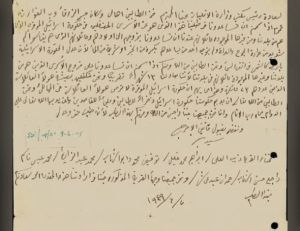
By midday, the killings came to an end when the mukhtar of the settlement of Zikhron Ya’akov arrived with a written order and handed it to the soldiers, helping to save approximately 40 men who had been taken away to be killed. The surviving men were arrested and transferred to the prison in the village of Ijليل, where they were forced to perform labor for the Israelis.
Meanwhile, approximately 1,200 women, children, and elderly people were forced to walk to an orchard east of the village. They were then loaded onto trucks and transported to the neighboring village of al-Fureidis. Tantura was subsequently demolished in its entirety, and the occupation authorities took control of all of its lands.
During that summer, most of Tantura’s inhabitants were expelled from the other areas under Israeli control. Only around 200 people remained in al-Fureidis, most of them children and women whose husbands had been detained. These residents were later expelled beyond the borders of Israel as part of prisoner-exchange operations, and their families followed them.
Mass Graves
Following the mass killings, the village was filled with bodies—in homes, on roads, in open spaces, on the beach, and even along the roads leading to the village. According to the accounts of Israeli soldiers, the process of burying the bodies took approximately ten days.
The occupying forces forced dozens of men from Tantura to dig large trenches and collect the bodies that had accumulated throughout the area. They then buried the bodies in these trenches. After completing this “task,” the soldiers also killed some of the men and buried them alongside the other victims in the mass graves.
The British research agency Forensic Architecture, which investigates state violence and human-rights violations, conducted an investigation into the mass graves in the village at the request of the Adalah legal center and in cooperation with a committee representing Tantura residents. The investigation lasted 18 months and employed modern techniques to analyze archival materials, aerial photographs, and maps of the village, in addition to testimonies from survivors of the massacre.
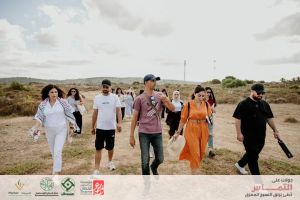
In May 2023, the investigation identified four sites of mass graves in Tantura. One is located beneath a parking lot on the beach; the second lies beneath a pedestrian walkway inside the tourist village; the third is on the beach near the house of Haj Yahya; and the fourth is located within the village’s historic Islamic cemetery.

The Official Israeli Narrative
Official Israeli accounts largely ignored the events surrounding the Tantura massacre. The Israeli army claimed that the village had sheltered around 50 refugees from other areas who, together with residents of neighboring villages, had prepared to confront the Israeli forces. On this basis, the army classified the village as a hostile base that had to be attacked.
The Haganah, for its part, claimed that the village had served as a point for smuggling Egyptian volunteers arriving by sea into Palestine.
The Israeli army announced in a military communiqué that hundreds had been captured during the attack, along with large quantities of spoils. Israeli authorities denied that a massacre had taken place, portraying the events as a battle like any other.
Israeli Testimonies Confirming the Massacre
For a long time, memories of the tragedy survived primarily as oral accounts told by those who had survived it, while official Israeli sources and other accounts remained silent about the massacre. This changed when Israeli researcher Theodore (Teddy) Katz completed a master’s thesis in 1998 examining the events that took place on the night of May 23, 1948, and the following day in Tantura.
His research was based on classified Israeli government documents and recorded testimonies from Palestinian and Israeli eyewitnesses, including soldiers from the Alexandroni Brigade who had participated in the events. His research concluded that a massacre had occurred and documented war crimes committed by Haganah forces that day in Tantura.