October 13, 2025
In Israel, there is a prevailing view across both the political right and left that is deeply reluctant to discuss what Palestinians call the Nakba, or what Zionists refer to as the 1948 War of Independence, including the massacres and forced displacement of Palestinians that took place during that period. Israeli filmmaker Alon Schwarz, however, recently dared to open this explosive chapter through his 2022 documentary film Tantura, which has sparked—and continues to spark—considerable controversy inside Israel.
Tantura was a Palestinian village on the Mediterranean coast south of Haifa. It ceased to exist after 1948, when it was destroyed by the Zionist Alexandroni Brigade, a formation regarded as an elite military unit.
The film argues, using documents and testimonies that amount to direct confessions, that soldiers from the brigade killed the village’s men, murdering more than 250 of them, and deported the women, children, and elderly to Jordan.
“I inspected the mass grave and found everything in order”
The film is based on the academic study submitted to the University of Haifa in 1998 by Israeli researcher Teddy Katz. In it, Katz concluded that fighters from the Alexandroni Brigade killed all the men of the village in June 1948 after taking control of Tantura on orders from David Ben-Gurion, and without any military justification. According to the study, there had been no fighting or resistance when the soldiers entered the village, arrested and assembled its inhabitants, and began shooting them. The burial of the bodies subsequently took approximately ten days.
Katz based his documented research on testimonies from 135 people, recorded on audio tapes totaling 140 hours, which he still retains. Half of the testimonies came from former Alexandroni Brigade fighters, while the other half came from Palestinian witnesses who survived the massacre, either because they were children at the time or because they were women who managed to survive.
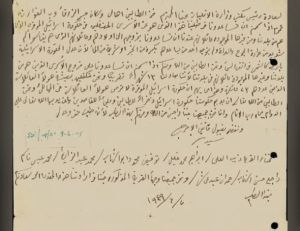
The film uses many excerpts from these recordings, supported by archival photographs and aerial imagery analyzed by an expert whom the filmmaker consulted to compare Tantura before and after the events. It also includes numerous documents, photographs, and film clips, including two or three documents that Katz says he obtained from the Israeli military archives without authorization—that is, documents he accessed secretly. One of them was written by the commander of the Alexandroni Brigade.
Katz holds up the document and reads:
“I was informed by the Arab Affairs Department that our soldiers who entered Tantura yesterday carried out extensive acts of vandalism after the occupation.”
He then reads from a second document displayed on screen in Hebrew:
“Letter dated June 9 from the Tantura base to the regional commander: I inspected the mass grave in Tantura yesterday and found everything in order.”
Katz comments: “I am not the one who used the term ‘mass grave.’”
“Teddy Katz”: A trial and an apology that shook Israel
Teddy Katz’s study initially passed without controversy, and he received his academic degree for it. Years went by without anyone paying much attention to it until 2000, when the Israeli newspaper Maariv obtained a copy of the study and published it, triggering a major controversy.
Those who had given testimony subsequently denied their statements and claimed that Katz had distorted them and placed them in a context contrary to the truth. They accused him of attempting to damage the state’s image. It should be remembered that the Second Palestinian Intifada against the Israeli occupation erupted in 2000.
The controversy went further when the witnesses filed a lawsuit accusing Katz of defaming them.
Amid the uproar, the university revoked Katz’s degree and expelled him, while an Israeli court found him guilty without listening to the recorded testimonies. He was forced to apologize for the conclusions of his study and retract them. According to the film, he did so under intense pressure, including numerous death threats and threats of retaliation against his children, as his wife recounts.

Teddy Katz was the researcher whose study exposed the Tantura massacre.
Katz appears in the film years later, wheelchair-bound and suffering from heart problems. He says he has suffered several strokes and speaks with difficulty as he answers the filmmaker’s questions and recounts his story. He says that the greatest mistake of his life was issuing that apology. He soon retracted it and petitioned the Supreme Court to reconsider the case, but the court rejected his request.
Avigdor Feldman, the lawyer who headed Katz’s defense team, says he accepted the case because it was the first time a case concerning the Nakba and its events had come before the court. He considered it extremely important for Israeli awareness of what had happened. At first, he says, he thought the Alexandroni Brigade soldiers were naïve for filing a lawsuit alleging defamation instead of allowing the matter to disappear into oblivion. He says he was ultimately glad they did so, although the case took a course he had not anticipated.
“War is war”: Conversations with witnesses to the massacre
The film opens with four people appearing before the camera—three women and one man: Teresa, Dora, Rachel, and Yitzhak. All are now in their early nineties and experienced the events as members of the community that later established Kibbutz Nahsholim.
Yitzhak sees little point in discussing the past. Teresa says she has only good memories of it. Dora later says that if Palestinians wish to commemorate their dead, they have the right to do so.
The four repeatedly say that all they remember about Tantura is that it was a beautiful village and that their relationship with the Palestinian Arabs had always been good. Yet they add that “war is war” and that all of this belongs to the past. The film, however, uses their interviews to demonstrate how Israeli collective memory refuses to confront the truth.
“We killed them, there is no doubt about it”: Testimonies from brigade soldiers
In a statement to Agence France-Presse, director Alon Schwarz said that the soldiers were able to spread misinformation and promote false narratives because no one had listened to Katz’s recordings. Had they listened to them, he argued, there would have been no doubt that something horrific had happened in Tantura and that there had been large-scale killings.

Schwarz interviews several former Alexandroni Brigade soldiers who are still alive, now advanced in age. Some reject the findings of Katz’s study and insist that no massacre took place in Tantura. Others acknowledge and confess that they killed many people.
One of them, Amitsur Cohen, is asked by the filmmaker whether he told his wife that he had killed Palestinians. He responds, “What was I supposed to tell her? That I was a murderer?” and laughs.
When Schwarz asks how many Palestinians he killed, Cohen says he did not count them. He explains that he had a machine gun and 250 rounds of ammunition and used all of them to kill Palestinians.
Another man says: “Yes, we killed. We killed many.”
A third says: “We killed them, there is no doubt about it.”
A fourth says: “What could I do? It happened.”
“He should have continued with his case”: An interview with the judge
One of the film’s important interviews is with Judge Dora Belbel, who presided over the case against Katz and convicted him. Schwarz interviews her at her home, where she is holding her small dog.
He asks whether she listened to the recorded tapes of Katz’s interviews with Israelis and Arabs containing damning testimony. She says she did not.

We then see her listening to excerpts from the recordings. She can only acknowledge the gravity of what she hears, saying, “It is shameful.” She then adds: “Katz should have continued with his case.”
One of the film’s most strikingly ironic sections features Israeli professor Hillel Cohen of the Hebrew University showing footage from the newsreel produced by the American company Metro-Goldwyn-Mayer. The footage contains staged scenes portraying Israeli soldiers in Tantura treating Palestinian residents with great respect, courteously helping women and men board buses. These scenes were deliberately produced as propaganda aimed at American audiences, presenting the Israeli forces as civilized.
Immediately afterward, the film shows the original footage shot by newsreel cameramen in Tantura after its homes had been destroyed and its inhabitants displaced and killed. These scenes, of course, were never shown to the American public.
“Shoot them in the head? That is what the Nazis did”
The filmmaker listens to the testimony of an elderly Palestinian woman from Tantura named Umm Rasmi, who was young at the time and still clearly remembers what she witnessed. She confirms, as does an elderly Palestinian man named Mustafa Masri, who was born and raised in Tantura and lived there until leaving in 1948, that the men were gathered together and that the bodies of those killed were buried in the area that is now, as the filmmaker points out on a map, a parking lot.

An Israeli expert, however, later demonstrates how evidence pointing to the massacre was subsequently removed.
The filmmaker plays one of the recordings for an elderly former Alexandroni Brigade soldier. He hears a man saying:
“We had a commander in Tantura who later became an important figure in the Defense Ministry. He began shooting the Arabs one after another with his pistol because they refused to surrender their weapons, and he killed them.”
The elderly man does not finish listening to the recording. He stops and exclaims: “No, that is Misha Vitkon’s voice. He was with me.” He then hesitates and repeats: “I don’t know what to say. I don’t remember. Maybe it happened, but I don’t remember. That’s not us. Shoot them in the head? That is what the Nazis did. I don’t believe it. I never heard that.”
Once again, the film presents what it describes as a mentality of denial that refuses to acknowledge the violence associated with the Zionist project. In one scene, someone says: “We are a pure nation.” The film seeks to challenge this idea and calls on Israelis to confront their past.
“You cannot create a safe place for yourself by creating a catastrophe for another people”
Professor Avner Giladi of the University of Haifa says in the film that the university rejected Katz’s thesis because it wanted to silence him retroactively. Removing his thesis from the university library, he argues, was disgraceful, particularly since Hitler’s Mein Kampf remains available. He adds that when a university takes a position against one of its researchers in court, it deviates from fundamental academic principles.
The film also features Professor Ilan Pappé, one of the “New Historians” and author of numerous books critical of the Zionist project, including The Ethnic Cleansing of Palestine, Ten Myths About Israel, and The Biggest Prison on Earth: A History of the Occupied Territories.
In the end, Pappé addresses what the film presents as its central purpose—the motivation that led the director to make it. He says that Israel’s self-image as a moral society is something he has never encountered anywhere else in the world: the idea that the Jews are God’s chosen people and that their army is the most morally committed army in the world.
He argues that it is difficult for Israelis to accept that they committed war crimes and that the Zionist project fundamentally faces a problem: Jews fled Europe in search of a safe place, but “you cannot create a safe place for yourself by creating a catastrophe for another people.”
The film’s ultimate message is that Israel is afraid to confront its bloody history.
Source: Al Jazeera Documentary