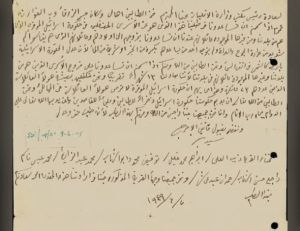
A Palestinian village located south of Haifa, 24 km away from the city and about 25 meters above sea level. The village was built on the remains of the Canaanite village of Dor, a name meaning “dwelling.” Its lands covered an area of approximately 14,520 dunams, and it was surrounded by the villages of Kafr Lam, al-Fureidis, ‘Ayn Ghazal, Jisr al-Zarqa, and Kabara.
The village had an estimated population of about 750 inhabitants in 1929 and approximately 1,490 in 1945. In 1948, armed Zionist organizations destroyed the village and forcibly displaced its inhabitants, whose population numbered approximately 1,728. This took place on May 23, 1948. The settlements of Nahsholim and Dor were subsequently established on the ruins of the village, in 1948 and 1949 respectively.
The Tantura Massacre
A number of Arab and Jewish historians have described the Tantura massacre as one of the most brutal massacres committed by the Zionist movement in Palestine, among approximately eighty such massacres.
On May 23, 1948, the Alexandroni Brigade of the Israeli army carried out the massacre against the inhabitants of Tantura in the Haifa district, immediately after occupying the village. The population was subsequently displaced to the West Bank, Jordan, Syria, Iraq, and Lebanon.
Historian Mustafa Kabha points out that the Israeli army chose to attack Tantura, whose population numbered around 1,500, because it was considered the weakest point in the southern area of Haifa. Its location on the Mediterranean coast made it relatively easy to occupy, unlike the neighboring villages situated on the peaks of Mount Carmel.
Kabha noted that the army targeted the village on the night of May 22, shelling it from the sea before raiding it from the east that same night. According to him, Tantura was selected not only because it was easier to attack, but also because it had a harbor through which weapons reached the Palestinians. He stated that “the massacre in Tantura had a profound impact on Palestinians in the neighboring villages and paved the way for their displacement.”
Israeli historian Teddy Katz, who faced a defamation lawsuit brought by members of the Alexandroni Brigade after revealing details of the massacre in his 1998 master’s thesis at the University of Haifa, stated that the testimonies he collected indicated that 230 Palestinians were killed in the massacre.
Katz—whose academic thesis was subsequently disavowed by the University of Haifa following the controversy surrounding its findings—also stated that Motti Sochler, a Jewish field guard at the time, had been tasked by the Israeli army with burying the dead. According to Katz, Sochler had counted the victims after they were killed on the seashore and inside the cemetery.
Historian Ilan Pappé, for his part, argued that the significance of the Tantura massacre, and what distinguished it from other massacres in Palestine, lay not only in the number of victims but also in the fact that it was carried out by the Israeli army just one week after the establishment of the State of Israel.
Pappé stated that the Tantura massacre, which occurred approximately one month after the Deir Yassin massacre, served what he described as the central Zionist objective of ethnically cleansing the country through armed force, terrorizing civilians, and expelling them from their homes.
Testimony of a Survivor
Hajj Fawzi Mahmoud Ahmad Tanji, one of the survivors of the massacre who currently resides in Tulkarm Refugee Camp, says that he still shudders whenever he remembers members of his family and his friends being killed before his eyes.
Tanji, who was in his seventies when he gave his testimony, recounted that the villagers defended their homes from midnight until their ammunition ran out in the morning.
According to Tanji, the army separated the men, who were forced to kneel, from the women, children, and elderly. He recalled that one soldier attempted to assault a girl from the al-Jabi family. Her father came to her defense, and the soldiers killed him with bayonets. The soldiers then continued searching the women and stealing their jewelry and valuables, while most of the women and children were deported to al-Fureidis.
Tanji also recalled that, while he was being taken home to search for weapons, the soldiers accompanying him shot Salim Abu al-Shukr, who was 75 years old.
He said:
“When we reached the house, the door was locked and blood was flowing from underneath it. I thought they had killed my mother. I entered with tears running down my face and found my dog dead. I could not find my mother, so I told them I did not know where she had hidden the weapons. One of the soldiers pushed me and took me back toward the beach. On the way, they shot the two women, ‘Azza al-Hajj and Wadha al-Hajj.”
The survivor further testified that the soldiers lined up between twenty and thirty young men near the al-Yahya family home, one of the largest families in the village, on the seashore, and killed them.
He also described how he and others were ordered to dig a trench approximately 40 meters long, 3 meters wide, and 1 meter deep. The soldiers then began taking groups of eight to ten men to carry the bodies and throw them into the trench. When Faisal Abu Hana attempted to resist, he was killed with rifle bayonets.
Tanji recalled:
“Even if I lived for a thousand years, I would never forget the faces of those soldiers. They looked like death itself, and I was waiting for my turn, certain that my final moments had come.”
The Egyptian-Palestinian novelist Radwa Ashour later wrote the novel The Tantourian, which tells the story of a young woman who survived the massacre and was subsequently displaced to Lebanon.
The Village Today
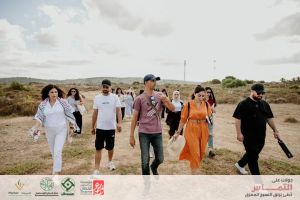
Today, little remains of the village apart from a maqam (shrine), a fortress, an old well, and a few houses. One of the surviving houses, belonging to the al-Yahya family, was built in 1882, as indicated by an inscription on the building.
Numerous palm trees and some cacti remain scattered throughout the site, which has since been transformed into an Israeli recreational park containing several swimming pools.
Source: Higher Presidential Committee of Church Affairs in Palestine.