Wadi’ Awawda – Haifa
A number of Arab and Jewish historians told Al Jazeera Net that the Tantura massacre, whose 60th anniversary was commemorated yesterday, Friday, is considered one of the most brutal massacres committed by Zionism in Palestine, out of approximately eighty massacres.
On May 23, the Alexandroni unit of the Israeli army committed the massacre against the residents of the village of Tantura, in the Haifa district, the day after its occupation. It subsequently displaced the inhabitants to the West Bank, Jordan, Syria, and Iraq.
A Weak Flank
Historian Mustafa Kabha explains that the Israeli army chose to attack the village of Tantura—which had a population of 1,500—because it was the weakest flank in the southern Haifa area, due to its location on the Mediterranean coast and because it was easy to occupy, unlike the other neighboring villages situated on the peaks of Mount Carmel.
Kabha noted that the Israeli army targeted the village on the night of May 22 by shelling it from the sea before raiding it from the east on the same night.
He observed that the occupying army chose Tantura specifically not only because it was easy to attack, but also because it had a harbor through which weapons reached the Palestinians. He said, “The massacre in Tantura had a profound impact on the Palestinians in the neighboring villages and paved the way for their displacement.”
Meanwhile, Israeli historian Teddy Katz—who faced a defamation lawsuit from the Alexandroni unit after revealing the circumstances of the Tantura massacre in a master’s thesis at the University of Haifa in 1998—confirmed that the testimonies he collected indicated that 230 Palestinians were killed in the massacre.

The occupying army did not stop at the massacre, but proceeded to displace the residents of Tantura (Al Jazeera Net)
Ethnic Cleansing
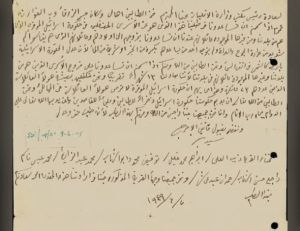
Katz—whose academic thesis was subsequently disavowed by the University of Haifa following the media controversy caused by its disclosure at the time—explained that Motti Soekler, a Jewish field guard at the time, had been assigned by the Israeli army to bury the dead. He explained that Soekler had counted the victims after they were killed on the beach and inside the cemetery.
Historian Ilan Pappé, for his part, considered the significance of the Tantura massacre and what distinguished it from other massacres in Palestine to be due not only to the number of its victims, but also to the fact that it was carried out by the Israeli army one week after the declaration of the establishment of the State of Israel.
Pappé stated that the Tantura massacre, which took place about a month after the Deir Yassin massacre, was intended to achieve the central Zionist objective of ethnically cleansing the country through the use of armed force, terrorizing civilians, and displacing them.
Honorable Resistance
Hajj Fawzi Mahmoud Ahmad Tanji, one of the survivors of the massacre who currently resides in Tulkarm Camp, says that a shiver runs through him whenever he remembers how members of his family and his friends were slaughtered before his eyes.
Tanji, now in his eighties, told Al Jazeera Net that the villagers defended their village honorably from midnight until their ammunition ran out in the morning.
Tanji recounted that the army separated the men, who had been forced to kneel, from the women, children, and elderly. He pointed out that one soldier attempted to assault a girl from the Al-Jabi family, so her father rose to protect her, and they killed him by stabbing him with bayonets, while the soldiers continued searching the women and stealing the jewelry and valuables they possessed.

Digging the Graves
Tanji recalls that while he was on his way home with the soldiers accompanying him, searching for weapons, they opened fire on Salim Abu al-Shukr, 75.
He said, “When we reached the house, the door was locked, and blood was flowing from underneath it. I thought they had killed my mother, so I entered with tears running down my cheeks and found my dog killed. I did not find my mother, so I told them I did not know where my mother had hidden the weapons. One of the soldiers pushed me, and they took me back toward the beach. On the way, they shot the two women Azza al-Hajj and Wadha al-Hajj.”
The massacre survivor confirms that the soldiers lined up between twenty and thirty young men near the Al-Yahya family’s house on the seashore and killed them.
He explains how they ordered him and others to dig a trench forty meters long, three meters wide, and one meter deep. They then began taking groups of eight to ten men to carry the bodies and throw them into the trench. When Faisal Abu Hana attempted to resist them, they killed him with rifle bayonets.
He said, “Even if I lived for a thousand years, I would never forget the features of the soldiers’ faces. They seemed to me like death itself, while I waited for my turn, certain that these were my final moments.”
Source: Al Jazeera