The village was built on a small sandy hill rising slightly above the seashore. It was located south of Haifa, approximately 24 km away, and had a railway station serving the coastal railway line. The village had historical roots dating back to the 13th century BCE and was occupied several times throughout history.
In August 1799, when Napoleon attempted to extend his control over Palestine, his retreating troops passed through the village and burned it. In 1855, Mary Rogers, the sister of the British consul in Haifa, reported that the village consisted of approximately 30 to 40 houses built of stone, mud, or clay, and that cattle and goats formed the main source of Tantura’s wealth. By the late 19th century, Tantura was described as a coastal village extending from north to south. It contained a square stone building used as a guesthouse, and had a population of about 1,200 people who relied on fishing and agriculture for their livelihoods. They cultivated 25 feddans, and the village maintained limited trade with Jaffa.
The village had an elementary school for boys, built around 1889, and another for girls, established in 1937–1938. Tantura was among the last villages in the Haifa area to fall. On the night of May 23, 1948, soldiers of the Alexandroni Brigade (Haganah) attacked it from all directions. The villagers resisted the attack until their ammunition ran out, after which the village fell to the Zionist forces.
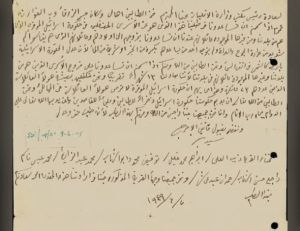
Because the people of Tantura resisted despite being unprepared and inadequately armed, the Zionist forces responded with a massacre, according to the source. The Haganah ordered the residents of Tantura to gather on the village beach and separated the men from the women and children. The women, along with some children and elderly people, were taken to the neighboring village of al-Fureidis. Boys and men between the ages of 10 and 50 were made to sit on the village beach until a Zionist officer named Shimson Mashvitz arrived. He began selecting groups of men: some were taken to prison, while others were chosen to dig a large pit. The Zionist forces then opened fire on the remaining men of the village. Afterward, the men who had dug the pit were ordered to bury the village victims, whose bodies had filled the streets. Once they had finished burying them, those men were also shot.
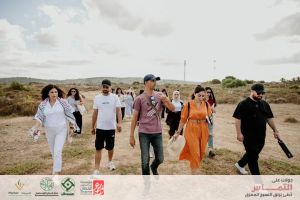
Today, little remains of the village except a shrine, a fortress, an old well, and a few houses, including the al-Yahya family home, built in 1882. Numerous palm trees and some cactus plants remain throughout the site, which has been transformed into a Zionist recreational park containing several swimming pools.