“Jisr az-Zarqa”… A Time Bomb in Israel – Al Jazeera
By Mohammed Mohsen Watad – Umm al-Fahm
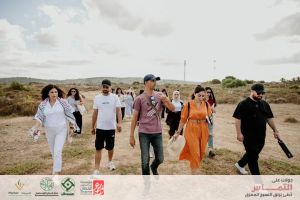
The wheels of history have stood still for decades in the Palestinian village of Jisr az-Zarqa, leaving it as a symbol that embodies the Nakba and the memory of place, as it is the only Palestinian town that has remained on the seashore.
The village is home to around 13,000 residents living in approximately 1,800 housing units spread across an area of 1,000 dunams, in addition to 500 dunams classified as a nature reserve, despite being privately owned by residents. Israeli planning and construction authorities prohibit their use due to their proximity to the coastline.
Due to the lack of available construction land, hundreds of young couples have been forced to leave the village, which urgently needs around 800 additional dunams for housing, as it suffers from one of the highest population densities among Palestinian communities inside Israel.
Unemployment among residents reaches around 35%, deepening poverty and negatively affecting education. The success rate in matriculation exams is only around 20%, alongside a growing phenomenon of school dropout, placing the village at the bottom of the socio-economic scale.
Marginalization and Isolation
The nearby town of Caesarea, located only tens of meters away from the village, reflects policies of discrimination, segregation, exclusion, marginalization, and isolation. It is home to Israel’s political, economic, and military elites and decision-makers, including Prime Minister Benjamin Netanyahu.
The geography of the area has reinforced the stark contrast between Caesarea, described as a “paradise on earth,” and Jisr az-Zarqa, which represents the reality of Palestinian displacement and hardship. The earth barrier separating the two communities has failed to hide the suffering or conceal the bleak reality created by Israeli policies.
The fishermen’s village tells its story through its head, Hajj Khalil Jarbaan. It remained steadfast despite the Nakba and the many challenges faced by its residents. Instead of developing into a tourist village and marina like neighboring Jewish coastal areas, its tin shacks have multiplied.
Jarbaan told Al Jazeera Net:
“Life in the village remains primitive and has not developed because of Israeli racism, which views the residents as a strategic threat and seeks to uproot them and remove them from this place. However, their steadfastness has defeated these plans aimed at taking their lands and turning them into a nature reserve.”
Like many fishermen, Jarbaan complains about the neglect of the beach and the harbor area, which forced dozens of families who depended on fishing to abandon the port in search of a dignified livelihood. He emphasized that repeated government promises to develop the area and establish a tourist village are nothing more than empty promises.
Hajj Khalil Jarbaan also said that for years some Israelis attempted, through financial incentives and persuasion, and at times through pressure, to convince residents to reduce or silence the call to prayer from village mosques, claiming it caused noise and disturbance. However, these efforts failed, followed later by Netanyahu’s support for legislation restricting the call to prayer.
He explained that Netanyahu has avoided visiting the village since his time as a minister, refusing to see its difficult reality or listen to the demands of its residents, which focus on housing, employment opportunities, services, and development.
Forced Migration
Sami Al-Ali, head of the Popular Committee in Jisr az-Zarqa, believes that the Palestinian Nakba is still ongoing and takes multiple forms. Although some features have changed, the essence of the social, economic, and educational issues, along with policies of restriction, marginalization, and exclusion adopted by Israel toward the village, threaten to create an explosion of conditions.
Al-Ali attributed these policies to what he described as Israeli efforts to uproot the village’s residents and force them into migration, based on the belief that keeping the village and its residents after the Nakba was a strategic mistake because of its vital location.
He told Al Jazeera Net that the siege and strangulation of the village have left negative consequences, and that the village is viewed as a “time bomb” capable of exploding. To prevent this, Israel has provided residents with only limited services and rights.
Sami Al-Ali pointed out that government services provided to the village do not amount to a real developmental and urban transformation. He said the reality of the village resembles a refugee camp, while neighboring Caesarea offers a stark contrast, despite the two communities being separated by a wall.
Source: Al Jazeera
To read the article, click here.