Elizabeth Bentley
Summary
This article presents a constitutive history of the last Palestinian crocodile, tracing its mentions in the literature of colonial zoology between 1870 and 1935. This was the historical period in which colonial zoologists proposed theories about the extinction of the Palestinian crocodile and the location of the last individual of this species. The central idea of the article is that the story of the extinction of the Palestinian crocodiles overlaps with the history of the violent extraction of resources during the colonial era, the racist exploitation of labor, and the confiscation of indigenous property. By tracing the last constitutive mention of the Palestinian crocodile in 1935 – the year in which a Zionist zoologist declared the crocodiles extinct – the article links the extinction of the Palestinian crocodiles to the actions of the British Mandate and the Jewish Colonization Association in Palestine (PJCA) – namely, the drainage and destruction of the crocodiles’ former habitat and the confiscation of land from the Arab Ghawarnah who lived there.
Clarence the crocodile walks heavily in the high summer heat, slowly immersing his body in the water to reappear in the stagnant green water of his pond. It is a midsummer day at the Biblical Zoo in West Jerusalem. The Israeli zoo, known locally as Gan Hachayot Hatanachi or the “Biblical Zoo,” boasts of its multiculturalism and its “inclusion” of Palestinian visitors from occupied East Jerusalem. Despite the heat, I pause in front of Clarence’s cage; I let my thoughts wander, imagining myself between his jaws, until the information panel to my left brings me back to reality. This panel is one of three hung between the windows overlooking Clarence’s cage, and they literally shape the visitors’ perspective of the crocodile behind the glass. The panels tell visitors that although Clarence is not originally from Palestine, Nile crocodiles once lived in the Palestinian swamps on the Mediterranean coast. The panel narrates the story of the extinction of the Nile crocodile from the region in the late Ottoman period, beginning with a brief account of the death of the last crocodile: “In 1905, the last crocodile in Israel was hunted by the residents of Jisr al-Zarqa [a Palestinian village].” It concludes by saying, “We must do everything we can to ensure that the remaining little wildlife in our region does not meet the same fate as the Nile crocodile.”
The Biblical Zoo’s narrative obscures the network of historical relationships that led to the crocodile’s extinction, starting with a crucial fact: that it was the colonists, not the indigenous population, who were behind the market for the few and dwindling crocodiles in the late Ottoman period in Palestine. By pointing to the identity of the Palestinian hunters and claiming that they, and only they, killed the last crocodile, the Israeli zoo panel implies that Palestinians were responsible for the extinction of the Nile crocodiles in the region. This historical narrative relies on the symbolic singularity of the last crocodile; the death of the last living organism of its kind is a declaration of its extinction with the death of a “single body at a specific moment.” However, scientific literature and taxidermy from that period show that dozens of colonial zoologists were contemplating obtaining the “last Palestinian crocodile” from Zor al-Zarqa / Kabara swamps. Many “last Palestinian crocodiles” – that is, crocodiles hunted just before the animals became completely extinct from the region – still exist today in British, German, and Israeli collections. Thus, the last Palestinian crocodile becomes a dynamic constitutive image rather than a unique specimen.
In this article, I conduct a constitutive history of the last Palestinian crocodile, tracing its mention in the literature of colonial zoology between 1870 and 1935. This was the historical period in which colonial zoologists theorized about the extinction of Palestinian crocodiles and the location of the last individual of its species. Just as the last crocodile is treated as a rhetorical figure, I address extinction as a “material reality and cultural discourse that shapes the popular worldview.” To contextualize the critical analysis of the archive of scientific materials from the colonial era, I consulted Palestinian scientific literature from that time period and conducted ethnographic interviews with local historians from Jisr al-Zarqa, whose ancestors, members of the Ghawarnah community, lived in Zor al-Zarqa / the Kabara swamps. This is especially relevant because the approach taken by colonial zoologists to extinction entrenched an unjust social system.
Studies on the constitutive history of Palestine have so far focused primarily on overt “political” texts such as politicians’ speeches and press materials. Therefore, the archived materials of scientific correspondence in the region, such as those discussed in this article, are saturated with the tactics of persuasion and power relations that underlie constitutive studies. By analyzing the discourse on extinction, this article contributes to highlighting forms of “slow violence” exercised against Palestinian lives and land, which are difficult to capture in newspaper headlines. This article also contributes to enriching the field of environmental history of Palestine and the environmental history of the modern Middle East more broadly, by drawing attention to the way animal extinction contributed to reshaping the Palestinian landscape during a critical period in Palestine’s environmental, economic, and political history.
The story of the extinction of the Palestinian crocodiles overlaps with the history of the violent extraction of resources during the colonial era, the racist exploitation of labor, and the confiscation of indigenous property. By tracing the last constitutive mention of the Palestinian crocodile in 1935 – the year in which a Zionist zoologist declared the crocodiles extinct – the article links the extinction of the Palestinian crocodiles to the actions of the British Mandate and the Jewish Colonization Association in Palestine (PJCA) – namely, the drainage and destruction of the crocodiles’ former habitat and the confiscation of land from the Arab Ghawarnah who lived there. Contrary to the Biblical Zoo panel, the Jewish Colonization Association in Palestine relocated the Ghawarnah to the site of Jisr al-Zarqa, which was established on a small portion of their ancestral land only after the swamps were drained. The research conducted by leaders of the Jisr al-Zarqa community on these historical events illustrates how settler-colonial environmental policies harmed their way of life. As noted in the conclusion of the article, this place-based research offers alternative paths for assessing the lives and loss of non-human beings in Palestine.
What is the Palestinian Crocodile?
Scientists generally assume that the crocodile species in Palestine is the “true” Nile crocodile, Crocodylus niloticus. It is the most common crocodile and one of the most famous due to its large size, aggressiveness, and tendency to eat humans. Its origin is the African continent, and among the places it lives is the Nile River, whose name appears in its Latin name. The habitat of the Nile crocodile was relatively small in Palestine, found in the wild in the far north of the country. The crocodiles lived in swamps and rivers extending along the Mediterranean coast, specifically just north of Caesarea and south of the southern slope of the Carmel mountain range.
From a zoogeographic perspective, the presence of Palestinian crocodiles and their small habitat there is not surprising, given its location in the Great Rift Valley at the meeting point of three continents; historical Palestine has exceptional biodiversity, is characterized by two main climatic systems, and contains about twenty-three distinct ecosystems. Nevertheless, the crocodiles, before and after their extinction from the region, were considered an ecological anomaly. In many stories about the origins of things, crocodiles in Palestine were considered recent arrivals to the region, brought to the Mediterranean coast as souvenirs from Egypt during one of the many waves of invaders: Greeks, Romans, or Egyptians. Most of these stories, which were circulated primarily orally and only a few documented, speak of traces of previous civilizations and corresponding place names still existing in the coastal region. These stories highlight the ancient, multi-layered, and sometimes violent relationship of the Palestinian crocodile with the human and non-human environment of the region.
Building on these narrative traditions and the environmental criticism of Palestinian and sympathetic thinkers, including Raja Shehadeh, Mazen Qumsiyeh, Sandy Hilal, and Alessandro Petti, my decision to define the crocodile as a “Palestinian crocodile” was not only pragmatic but also political. Pragmatically, I describe the crocodile as a “Palestinian crocodile” to clarify the geographical scope of the Nile crocodile’s extinction from the region for the purposes of this study – that is, from its habitat in historical Palestine. The colonial zoological literature, written during the late Ottoman and British Mandate periods, which I discuss in this article, often refers to the crocodiles as Palestinian, even though “Palestinian crocodiles” are not (and never were) a scientifically recognized classification for this species. By using the term “Palestinian crocodile” within historical timeframes and up to the present, I also aim to highlight the historical and ongoing place-based relationships between crocodiles and the indigenous inhabitants of the land. Crocodiles in Palestine have always been intertwined with “cultures of nature” – whether real or imagined – that do not serve the illusions of an empty virgin land or an ancient biblical past.
The Habitat of the Palestinian Crocodiles
In the late nineteenth century, the crocodile was one of many creatures that inhabited and fed from the Zor al-Zarqa / Kabara swamps. Mentioning the relationships between the multiple species that historically lived in this area is crucial to avoid forming an isolated and illogical understanding of the impact of the crocodile’s extinction. As apex predators, the open appetites of the crocodiles helped shape the swamp ecosystem. Crocodiles fed on crustaceans, frogs, fish, migratory birds – and, according to European researchers, livestock that came to drink from the Zarqa River. Crocodiles, in turn, were a food source for other creatures. Among the most famous symbiotic relationships is that between the spur-winged plover and the crocodile; the plover feeds on meat scraps in the crocodiles’ open mouths, cleaning their teeth. Otters also ate crocodile eggs and young, while mosquitoes – which thrive in stagnant water areas – sucked the blood of crocodiles and all other living creatures moving through the swamps.
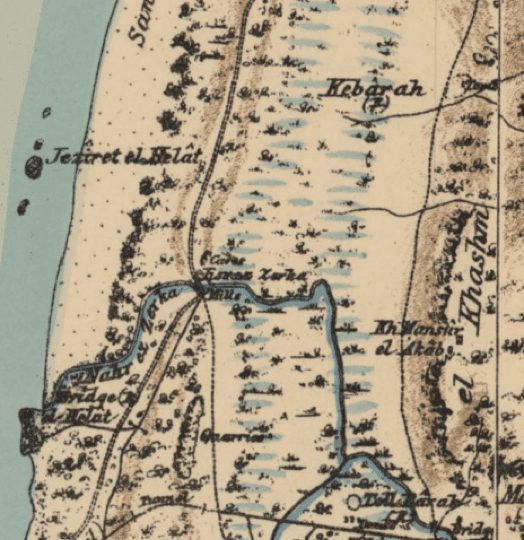
The swamps were also an economic and cultural livelihood for the human population of Palestine. The fresh water of the Zarqa River, known for its clear blue color, was used for drinking and agriculture. Swamp water was used to operate a wheat mill next to a Roman-era stone dam in the swamps. The swamps were located near Caesarea and other Palestinian villages, and after 1882, they became adjacent to one of the earliest Zionist settlements, Zichron Yaakov. The swamps themselves were home to two Bedouin communities, “Arab al-Kabara and Arab al-Ghawarnah,” who lived in camps and caves in the rocky hills of the swamps. The Ghawarnah, accused of eliminating the crocodiles on the Biblical Zoo panel, whose descendants still live in the area today, are essential elements of the following analysis.
The name “Arab al-Ghawarnah” comes from the meaning of “people of the lowlands” or “the Ghor” (Jordan Valley). For reasons related to social status intertwined with their residence in the swamps, the name carries a charged and sometimes stigmatized history. The Ghawarnah who lived in the Zor al-Zarqa / Kabara swamps were primarily members of the Amash and Jarban families. As local historian Muhammad Hamdan and environmental and community activist Sa’ida al-Ali – who live in Jisr al-Zarqa and are descendants of the original families – told me, the Ghawarnah earned their livelihood from raising water buffalo, weaving mats from the flexible young reeds abundant in the swamps, and hunting, at which they were known for their skill. Palestinians of Sudanese origin were also associated with the Ghawarnah during this period. Indeed, the swamps were described as a community of partly sub-Saharan African origin that welcomed those marginalized elsewhere or fleeing violence. Their blackness – as most Ghawarnah are dark-skinned – was a subject of frequent fascination highlighted in the writings of colonial-era researchers who came to hunt crocodiles and document plant and animal life in the swamps.
Zoology in the Colonial Era in Palestine
By now, it should be clear that Europeans in the late nineteenth and early twentieth centuries did not “discover” Palestinian crocodiles, even by European epistemological standards. In addition to the swamp environment described above, stories about Palestinian crocodiles appear in the works of other Palestinian intellectuals such as Abdallah Mukhlis and Stephan Hanna Stephan. However, the motivation to systematically kill and collect Palestinian crocodiles as rare commodities – and thus focus on the last Palestinian crocodile – appears to have been driven primarily by colonial forces. To this day, I have found no evidence of a widespread Palestinian tradition of crocodile hunting outside the Ghawarnah community living in the swamps, or a large Palestinian consumer market for Palestinian crocodile products during this period. This is not surprising, as by all accounts the number of crocodiles in Palestine was limited and confined to a specific area.
Efforts to recover and address historical human-crocodile relationships in Palestine have become more complex due to the confiscation and destruction of Palestinian towns and villages surrounding the swamps during the Nakba. Apart from the Ghawarnah, these coastal communities were geographically closest to the crocodiles and thus more likely to incorporate crocodiles into their economic and cultural infrastructure. Despite my sensitivity to these violent historical attempts, my conclusions are based on interviews with community historians from Jisr al-Zarqa and studies of local hunting practices and economic exports conducted by Palestinian and European researchers during this period.
The relationship between imperial science, the extraction of natural resources, and territorial expansion in the late Ottoman and British Mandate periods is well documented. This phenomenon of ecological imperialism has been noted and critiqued in the works of travel writers and colonial administrators who, in their search for biblical-era remnants, ignored or even completely erased the rich and exceptional biological and human diversity of Palestine. Likewise, they described Palestine as a barren land in dire need of environmental management and improvement. In contrast, colonial zoologists and collectors recognized the abundance and diversity of Palestine’s flora and fauna and considered it a subject worthy of scientific inquiry. But this scientific appreciation was not separate from imperial ambitions and the pursuit of profit. Wildlife protection laws were not enacted in Palestine until 1924, after the probable extinction of the crocodiles from the region, and even then, enforcement was not strict. Colonial zoologists did not merely observe Palestine’s animals in their natural environment and record observations; the goal of biological speciation was extraction and the commodification of these creatures. These “acquisition” processes – although the term ‘acquisition’ is a euphemism – involved a network of human and non-human actors, as colonial zoologists hunted and killed Palestinian animals, studied them, and transported their remains for retention in collections.
While some prominent colonial zoologists maintained private collections in Palestine, the primary colonial markets for living organisms taken from Palestine were in Western Europe and the United States.
The nineteenth century witnessed the peak of interest in natural history and taxidermy, as museums and private collectors alike sought to acquire mounted animals from colonized lands, especially wild and ferocious predators. This obsession extended to living creatures “from the Holy Land,” which “the European public was convinced they had a ‘right’ to… more than… any other European region.” Overall, this sense of distinction and entitlement escalated due to competition among European nations seeking to consolidate their scientific dominance over Palestine and over each other.
Mounted specimens from the Holy Land served multiple purposes. At a time when living species from tropical or subtropical climates were rarely able to survive in European zoos, taxidermy enabled European researchers to study animals living in the distant colonized lands of Palestine. In the pre-cinema era, taxidermy facilitated the visual display of power and authority to a wider European audience. Natural history museums and public education programs were widespread, especially during the late nineteenth and early twentieth centuries. As both animal artifacts and human-made art, “taxidermy not only confirmed the [nation’s] control over natural resources and its discovery of new creatures, but it was also an embodiment of the scientific innovation and knowledge it had achieved.” After being disemboweled and stuffed with wire and linen, Palestinian animals were brought back to life and displayed in glass cases for museum-goers in London and Berlin.
The “Last Palestinian Crocodile” in Colonial Zoological Literature
Despite aligning with these broader trends, the colonial commodification of the Palestinian crocodile had a particular characteristic; it could not be confused with other animal species in the Holy Land. For nearly half a century, colonial zoologists unsuccessfully attempted to speculate on the origins of the Palestinian crocodile, which had almost disappeared and was on the brink of extinction. This line of hypothetical research consistently focused on the location of the mysterious last Palestinian crocodile.
For example, although the articles were published thirty-six years apart, Henry Baker Tristram began his article in The Fauna and Flora of Palestine in 1884 and George Buchanan Gray in the Palestine Exploration Quarterly (PEQ) in 1920 from the same starting point. Both stated that the extinction status of the Palestinian crocodile represented a major unsolved mystery; both analyze the evidence proving the existence of this crocodile. This “evidence” is the small number of remaining last Palestinian crocodiles that other colonial zoologists claimed to have seen, and sometimes succeeded in capturing and killing, in the Zor al-Zarqa / Kabara swamps. Both authors then recount the arduous efforts they made to acquire a last Palestinian crocodile (an endeavor in which Tristam succeeded and Gray did not). The striking similarity in these narratives shows how the theories of colonial zoologists about the extinction status of the crocodiles always translated into a campaign to kill the remaining last crocodiles rather than protect them. It also shows how speculating about the fate of the last crocodile was a constant feature of colonial literature on Palestine’s environment.
Even among naturalists, the allure of the last Palestinian crocodile transcended the boundaries of scientific research in zoology and extinction studies, developing a symbolic, almost mythical, dimension. Donna Haraway explains that they – the crocodiles – were “symbols,” but “at the same time creatures of imagined possibilities and creatures of fierce and ordinary reality, and so they involve intertwined dimensions requiring answers.” As with all rhetorical symbols, the persuasive power of the last crocodile – its ability to summon an audience and urge them to action – depended on “shared meaning.” As it circulated in colonial scientific literature, it reflected and partitioned the values and aspirations of the colonial public masses.
I use the phrase “colonial public masses” (rather than “academia” or “scientists”) to highlight the observable colonial sensibilities that drove European zoologists to obsess over speculating about the crocodiles’ extinction status throughout this period, despite the relatively small size of the crocodile’s habitat. After all, it is not a small insect they were chasing, but a rather large reptile. Also, the extinction of living organisms is gradual and often difficult to quantify. Nevertheless, I argue that the persistent speculations of colonial zoologists about the extinction of the Palestinian crocodiles required a degree of willful ignorance (or intrinsic ignorance).
Here I refer to the colonial zoologists’ disregard for the way local inhabitants lived and interacted with the Palestinian environment, as well as their distrust and contempt for Palestinians, even in cases where they relied heavily on Palestinian environmental expertise. The scientific literature on Palestine’s animals in the colonial era also reinforced the racist and historically inaccurate claim that “science belongs to the West, and ignorance to the rest.” However, colonial writings on the last Palestinian crocodile also reflect the West’s connection to symbolism and its investment in mythological thinking.
A simple but powerful example of the colonial dimension of this speculative project is Stephan Hanna Stephan’s lack of interest, compared to his European counterparts, in speculating on the crocodiles’ extinction status or participating in weaving myths about the last crocodile, even when he published his works alongside theirs.
Like many of his Palestinian colleagues, Stephan published his study in the Journal of the Palestine Oriental Society (JPOS), thus destabilizing the reductive divisions between European and Arab scientific research during this historical period. Stephan included an Arabic proverb about crocodiles in his series of articles entitled “Animals in Palestinian Folklore” (1925-28) published in the JPOS, where he referred to the presence of Palestinian crocodiles and their extinction status in a brief footnote: “Crocodiles were seen in the Kishon (Nahr al-Muqatta’) until the middle of the last century.”
Although colonists were still eagerly trying to determine the location of Palestinian crocodiles in 1920, Stephan explicitly dated the decline in crocodile numbers, if not their complete disappearance, to the mid-nineteenth century. Since Stephan wrote the article from his scientific perspective as a Palestinian folklorist, it is logical to assume here that the mythical figure of the last Palestinian crocodile did not carry significant importance in Palestinian animal folklore during this period.
Why did Palestinian crocodiles – especially the last one – attract such interest from colonists? What aroused their curiosity in this small, confined, and dwindling (though not yet extinct) group of creatures? There is no single answer to this question; the last Palestinian crocodile was a highly flexible rhetorical figure. Its continued circulation through colonial zoological literature was driven by its exceptional conceptual and material dynamism. Below, I organize my analysis of the key assertions of the last crocodile through a series of categories where its scientific, cultural, material, and imagined characteristics intersect. I show how the characteristics of the last crocodile (its traits or attributes) and its consideration as property (“something owned by someone”) emerged as patterns for acquiring value and serving capitalist accumulation and colonial conquest. The colonists’ decades-long pursuit to locate the elusive last crocodile involved layers of physical and epistemic violence against Palestinian lives and land, violence that exceeded the outcomes of individual colonists’ hunting efforts.
Despite the competitiveness among European nation-states, colonial zoologists from various national and religious affiliations, in their search for Palestinian crocodiles, referred to animals they saw and bought from each other. European specialists and researchers from various fields who were amateur naturalists documented and collected Palestinian crocodiles and published their articles on them in the same journals and periodicals. I rely here on colonial zoological literature published between 1870 and 1935, focusing on publications by Germans (Catholics and Templers), the British, and Zionists, as they were prominent in documenting, owning, and theorizing about Palestinian crocodiles.
I use the terms “colonial” and “colonial zoologists” interchangeably here, distinguishing between them when necessary. However, national or religious affiliation alone cannot serve as an organizing principle, and my overall goal here is to address the prevalent perceptions of Palestinian crocodiles across various colonial projects. Below, I show how the colonists’ pursuit of Palestinian crocodiles was driven by the colonists’ enduring fascination with the “idea of eternity” as a spatiotemporal structure, the market value of Palestinian crocodiles as rare commodities, historical place-based connections, and the value of crocodiles as symbols with a racialized character for colonized lands in European animal imaginaries.
Eternity
The colonial zoologists’ obsession with the last Palestinian crocodile was partly driven by an ancient European fascination with the “idea of eternity” as a spatiotemporal structure. This fascination embodies the convergence of evolutionary theory and imperial perceptions that shaped colonial research on the land and life of Palestine. During this period, “evolutionary theory was considered the most important doctrine of the empire” by both its “promoters” and its critics. In colonial cultural production, this theory merged with the myth of the “last remaining individual of the race” and the enduring fascination with the “rise and fall” of civilizations. From a purely Darwinian perspective, rarity is linked to weakness, not value. The colonists’ writings about Palestine certainly reflect their self-confidence and commitment to the superiority of the white European man. But these sentiments, and the acts of violence and exploitation associated with them, were often concealed behind a veil of “imperialist nostalgia.” The prospect of extinction spurred colonial researchers to document the lives of Palestine’s human and non-human inhabitants in words and images. As Beshara Doumani notes, their biased orientalist studies aimed to “document an unchanging society before its extinction due to contact with the West,” failing to see and address the differences and cultural, economic, and intellectual dynamism of Palestinian society.
Rarity
The scientific value of the last crocodile as a rare practical specimen could not be separated from its market value as a rare commodity. In addition to discussing taxonomy and natural habitat, the writings of colonial zoologists on the last Palestinian crocodiles included references to money: the inability to pay the cost of the last crocodile, the willingness to pay “any reasonable price,” and the triumphant statement that ‘announcing a reward’ led to obtaining one of these animals after a zoologist failed to hunt it. This contradictory expression of ownership and requests for funding shows that “speciation,” as Fred Moten and Stefano Harney argue, leads to “appropriation.” They see “speciation” as a reciprocal process; it is an act of violent domination over the land and the colonized Other that creates or “species” the white European man who is “self-possessed” and “possessor of the land.”
As with extinction, capitalist concepts of property and the commodification of animal-related products were not exclusive to Europe during this period. However, colonial zoologists often reinforced the violent divisions described by Moten and Harney, and the intertwined relationship between speciation and commodification often extended to humans; capitalist value relations emerged as a quasi-taxonomic distinction between “us” and “them,” colonizers and colonized. Colonial zoologists recognized that possessing rare and expensive crocodiles would elevate their status among their European male peers. In contrast, they dehumanized indigenous individuals, whom they perceived – and the word “perceived” is sensitive here – as interacting with nature outside the circuits of capital. The price colonists set for Palestinian crocodiles, their intellectual production related to them, and their treatment of them as rare commodities in the European market depended on the appropriation of Palestinian land and life as replaceable and consumable resources.
Colonial zoologists occasionally mentioned dialogues with Palestinian acquaintances (unnamed) from the business world in Haifa and Nazareth; this suggests they benefited (albeit indirectly) from relationships (however fleeting) with members of the middle and upper classes in Palestinian cities.
The dynamics of economic exploitation appear most clearly in the way colonial zoologists described the Ghawarnah. The colonists spoke openly about their reliance on the Ghawarnah as laborers and on their hunting skills and knowledge of the swamp environment. Nevertheless, they never mentioned paying the Ghawarnah or compensating them in any way. Despite the colonial zoologists’ appreciation of the value of Palestinian crocodiles in the market, there was no consideration of the crocodiles or the swamps as the property of the Ghawarnah – or at least not from this perspective.
The intertwined relationship between imperial science, capitalist exploitation, and racist dehumanization is evident in an article published in 1887 in the PEQ by the German-American Templer researcher, Gottlieb Schumacher. Schumacher not only depicted the Ghawarnah outside the circuits of capital but, for him, they were capital themselves. Schumacher recounted a long and eventful story of his week-long fruitless search for the last crocodile, claiming he relied heavily on the Ghawarnah during his journey, referring to them as “our Ghawarnah” (i.e., “our Ghawarnah”), meaning that the Ghawarnah hunters were his property rather than independent human beings. Schumacher’s racism and dehumanization of the Ghawarnah were evident in his assessment of their “dark-skinned” physical build to choose who was worthy to “take” with him on the hunt.
Place
Palestinian crocodiles gained popularity among Europeans through historical place-based associations. The crocodiles were linked by name to several archaeological and geographical sites located near their habitat, connected to the Hellenistic and medieval Crusader history of Palestine. Among these sites were the ruins of the Greco-Roman coastal city of Crocodilopolis and the nearby Zarqa River, which is said to have been known during the Greco-Roman period as Crocodilon.
The ruins and the river attracted a wide range of Europeans in the nineteenth and twentieth centuries, many of whom were able to study the significance of ancient and currently used place names. These reflections directed attention back to the numbers of living crocodiles in the area, and thus Palestinian crocodiles were frequently mentioned in various writings of European researchers and travelers who otherwise might not have paid attention to Palestinian wildlife. As is evident from the frequent citations that often characterized colonial literature on Palestinian crocodiles, the continued publications in this field increased European knowledge of the crocodiles and thus increased the cultural value of the crocodiles.
By excavating and discussing the historical connections of Palestinian crocodiles to place, the colonists reinforced the European interpretation of Palestine’s physical history. The crocodile became a reptilian intermediary for rewriting Palestine’s past and claiming its ownership, thereby erasing Arab identity from the history of the coastal swamps. The more scientific and research-based colonial literature often included uneven literary histories of references to local geography and crocodiles, moving quickly from Greco-Roman texts to medieval Crusader texts to nineteenth-century European texts, omitting or overlooking periods of Arab rule in Palestine’s history. They generally ignored references to Palestinian crocodiles and crocodile place names recorded by regional scholars, such as the eleventh-century text of Nasir Khusraw or their contemporary Mukhlis. Instead, the origin story of the Palestinian crocodile aligned with the supposed origin story of Western civilization, in which Europe is presented as the cultural and military heir of Greece and Rome.
It was not only the crocodiles that wore the rhetorical cloak of eternity, but the colonists as well. By observing (if not successfully hunting) Palestinian crocodiles, nineteenth- and twentieth-century colonists sought to weave themselves into the noble legacy of past invaders.
The German Templers, in particular, had a pragmatic place-based advantage due to their colonies in the region, which predated British or Zionist colonial-settler presence. Although the British were enthusiastic about collecting crocodiles, historical records indicate that the Germans were more successful in observing crocodiles in the wild and obtaining specimens. On several occasions, starting in 1877, Templers in Haifa visited the Zor al-Zarqa / Kabara swamps to restore the wheat mill and build other structures. Their documentation of the crocodiles in Die Warte des Tempels was cited as evidence by colonial zoologists outside Templer circles. The German sites in Haifa were a center for colonists interested in obtaining specimens. Schumacher was the nexus of the Templers’ practical relations in Haifa, and his writings about “those famous crocodiles” appeared in numerous British and German publications. Even among colonists, access to the last crocodile’s habitat depended on political and economic strategy.
Imagined Images
An ancient European fascination with crocodiles fueled the colonial zoologists’ obsession with Palestinian crocodiles. Long before the nineteenth century, crocodiles occupied a central place in European bestial imaginaries. Since crocodiles are not native to the European continent, European knowledge of crocodiles relied on a rich tapestry of Arabic and African texts and traditions related to crocodiles – a broad and diverse topic beyond the scope of this article. The image of the crocodile was shaped by Egyptian, Roman, Gaelic, and Christian tropes, and was animated in vivid, if physiologically inaccurate, ways in European visual arts, literary fiction, and constitutive theories. Crocodiles often appeared as the “great monster of hypocritical evil” and a symbol of foreign terrain. These reptilian imaginings were sometimes reinforced by crocodile remains transported from the African continent. Before the modern era of natural history, crocodiles were hung from the ceilings of European churches and apothecaries.
Against the backdrop of these long historical trajectories, crocodiles emerged with renewed vigor as a “major imperial symbol” from the late eighteenth century onward. This fascination was heightened by the iconic image of a chained crocodile that appeared on “Napoleon’s medal for the conquest of Upper Egypt.” As Edward Said noted, this campaign played an important role in stimulating the “Oriental Renaissance” that swept Europe in the late eighteenth and nineteenth centuries. Attributing things to the crocodile (‘crocodilian’) became a convenient and generalized way of referring to the “colonial Other” and the dangers present in colonized lands “across the imperial frontier” because they inhabited Africa, India, and Asia.
Crocodile hunting emerged as an imperial metaphorical expression of European masculine dominance. Unlike charismatic mammals such as lions or leopards, which colonists associated with nobility and strength, crocodiles were considered untrustworthy creatures to be overcome. By the time colonial interest in Palestinian crocodiles peaked at the turn of the twentieth century, crocodiles had become a widespread racial symbol of the colonized Other.
This phenomenon does not account for all the characteristics of Palestinian crocodiles in the eyes of European zoologists. Due to their rarity and their habitat in the Holy Land, Palestinian crocodiles were often viewed more positively compared to crocodiles in neighboring Africa, which colonial governments and hunters generally treated as pests to be eradicated rather than desirable collectibles. Nevertheless, there is no doubt that the ancient European obsession with the crocodile contributed to the colonists’ intense fondness for these small, local Palestinian creatures. This explains how and why Palestinian crocodiles easily emerged as a symbol of Palestine’s “foreign” terrain and its military conquest.
The crocodile obsession is evident in the publications of the Egyptian Expeditionary Force, Palestine News, where inquiries about Palestinian crocodiles surpassed those concerning any other Palestinian animal species. The pages of Palestine News were filled with research summaries, poems, letters to the editor on the topic of Palestinian crocodiles, and announcements from self-identified zoologists expressing their desire to purchase Palestinian crocodiles. The precise habitat and extinction status of the crocodiles were not important to some authors of Palestine News, most of whom had recently entered Palestine via Egypt. In a series of works blending fact and fiction, they imagined wild crocodiles throughout the Holy Land: an anonymous British military man claimed to have seen two crocodiles killing a camel on the Ramallah road; another wrote a poem comparing the “tears of the Palestinian crocodile” to the saltiness of the Dead Sea. Alongside available scientific and seemingly factual articles, this imaginative cultural output reflected and reinforced the British colonial fascination with Palestinian crocodiles.
The “Last Crocodile” at the Time of Swamp Drainage
The project to drain the Zor al-Zarqa / Kabara swamps ultimately put an end to half a century of colonial zoologists’ speculation about the location and extinction status of the last Palestinian crocodile. In his book Animal Life in Palestine published in 1935, the Zionist zoologist Frederic Simon Bodenheimer specifically invoked the drainage process as evidence that the Palestinian crocodiles had finally become extinct. Bodenheimer acknowledged that by destroying the crocodiles’ former habitat, the swamp drainage project made life for crocodiles in Palestine impossible.
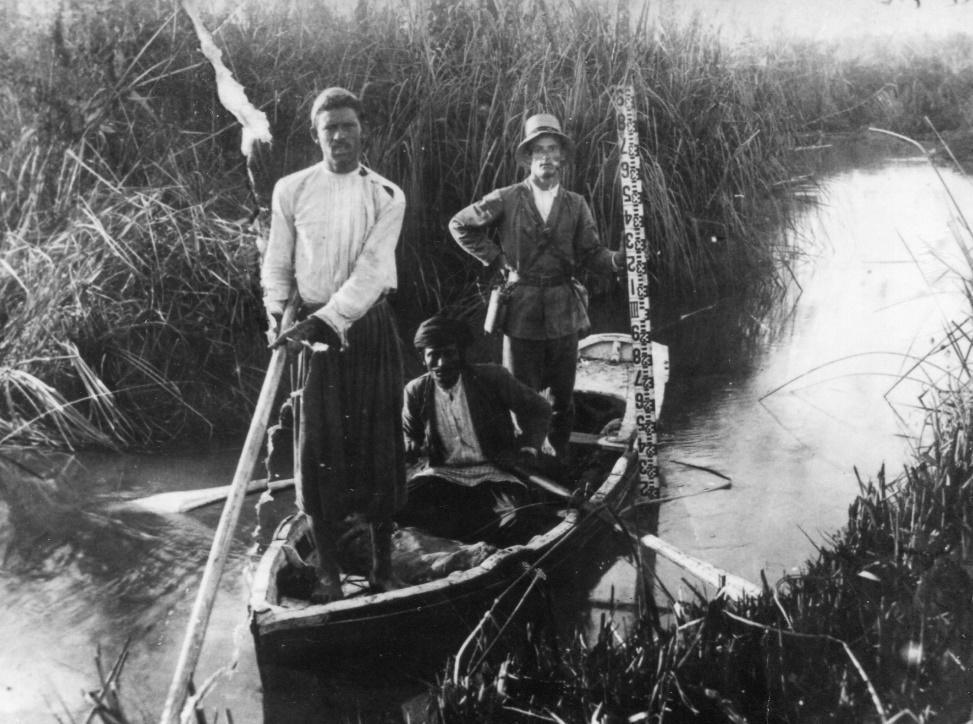
The drainage project reflected changes in power dynamics in Palestine during the British Mandate. The project, initiated by the British Mandate and the Jewish Colonization Association in Palestine (PJCA) in the early 1920s, was based on a different combination of “state, science, and capital” than that underlying the colonial zoological project. Although draining the swamps had implications for natural science, it was primarily implemented as a scientific project under the banner of public health; malaria was a pressing issue at the time, linked to mosquitoes that thrived in the Palestinian swamps.
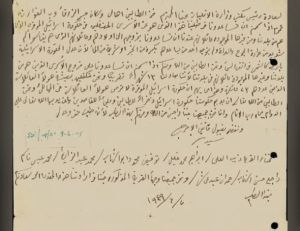
Many members of the Palestinian Arab community supported the need to combat malaria and invest in swamp drainage – an issue raised by Bodenheimer’s contemporary, Tawfiq Canaan, in 1936. Nevertheless, the Zor al-Zarqa / Kabara drainage project was a means for colonists and settlers to seize land. The Jewish Colonization Association in Palestine was eager to take over so-called “waste lands” located near several existing Zionist settlements. All attempts by the Ghawarnah to defend their land in a protracted legal battle failed. They were exploited as laborers in the drainage process and relocated to the newly established town of Jisr al-Zarqa, built on a small portion of the land they had previously owned.
Bodenheimer’s declaration of the extinction of the Palestinian crocodile is more than just a conclusion to a scientific debate within the colonial framework. Given his position as a Zionist scientist and the relationship he posits between the crocodile’s extinction status and the drainage project, Bodenheimer’s text reflects the continuation and evolution of the colonial zoological project in Palestine, which had been primarily built until that moment by European Christians. It also reflects the ongoing interactions of the story of the Palestinian crocodile’s extinction; the extinction of the Palestinian crocodiles was not merely the death of an isolated creature consecrated by previous imperial forces, with its material and cultural traces preserved in archival texts, mounted specimens, or historically inaccurate extinction narratives produced by Israeli cultural institutions like the Biblical Zoo. Rather, the story of the Palestinian crocodile’s extinction continued on the ground through the politics and environmental policies of the Zionist settler project that began to entrench its influence in Palestine during the British Mandate.
A deeper rhetorical analysis of Bodenheimer’s introduction reveals these relationships. Bodenheimer engages in scientific dialogues with dozens of colonial zoologists who speculated on the extinction status of the crocodiles and attempted to capture them. He mentions several of the last Palestinian crocodiles and the German and British institutions that hold the remains of these crocodiles.
Like the colonial zoologists who wrote earlier about Palestinian crocodiles, Bodenheimer relied on the Ghawarnah’s knowledge of the swamp environment, stating: “The Bedouin, who inhabit the swamps, often speak of losses in human lives and goats” due to the crocodiles. But unlike the colonial zoologists writing in the early 1820s, Bodenheimer does not end with an unconfirmed theory; rather, he writes a conclusion to the crocodile saga:
Subsequently, the swamp south of Carmel was completely drained, and on its land was established the flourishing settlement of Binyamina, which occupies the main former breeding site of the crocodiles. It is almost certain that the Nile crocodile has disappeared and therefore should be added to the list of extinct creatures.
Loaded value statements such as “completely drained” and “flourishing settlement” indicate that Bodenheimer supported the drainage of the swamps and expressed no regret for the destruction of an area of exceptional biodiversity, which aligns with the scientific norms of the time. His subsequent description of the Binyamina settlement shows that his approval of the swamp drainage was driven not only by public health concerns but equally by settler-colonial policies.
According to Said, the dispossession of Palestinians is never mentioned in Bodenheimer’s narrative. He did not speak of or mention any of the effects of the swamp drainage on its Ghawarnah inhabitants, despite the fact that they were exploited as laborers and that the destruction of their communal life was what made space for the construction of Binyamina. This omission is striking because Bodenheimer had benefited from the Ghawarnah’s knowledge of their residence and environment to support his scientific hypothesis about the crocodiles. Bodenheimer’s selectivity in utilizing the Ghawarnah or erasing their existence suggests the possibility of dispensing with and eliminating Palestinians, a logic that applies not only to colonial zoology (motivated by the principle of Yedi’at Ha’aretz, “Knowledge of the Land,” among Zionists) but also to the broader Zionist settler-colonial project.
This apparent erasure is also evident in Bodenheimer’s description of the swamps before and after drainage. By describing the swamps as the “main breeding ground” for the crocodiles and then the drained land as the site of a “flourishing settlement,” he conflates Palestinian human existence with the animal existence of the crocodiles. Deploying what Achille Mbembe calls the “logic of animality,” Bodenheimer dehumanizes the Ghawarnah and implicitly challenges their right to and ownership of the swamps.
The events Bodenheimer attempts to ignore here had significant impacts on the Ghawarnah community. In our discussions about the intertwined environmental and human history of Jisr al-Zarqa, Sami al-Ali and Muhammad Hamdan (one a local historian, the other a prominent community figure) spoke about their theory – developed through years of archival research and conversations with community elders – that their community’s Nakba dates back to 1924 when the swamps were drained. The sudden, violent, and disorienting transition to urban life, along with the near-total destruction and loss of their land, disrupted the lifestyles and livelihoods that were intertwined with the ecology of the swamps.
In their research, al-Ali and Hamdan address three processes of isolation and separation. First, they confront the community’s unique situation (especially in the aftermath of 1948), which has often been stigmatized not only among Israelis but also among some Palestinians. Jisr al-Zarqa is the last remaining exclusively Palestinian town on the Mediterranean coast within Israel’s 1948 borders, which constitutes another rhetorical figure of “eternity” that hangs over the community today. Their designation of their community’s particular historical trauma as a Nakba is a form of community empowerment; it is a means of including themselves in the broader narrative of the Palestinian people.
Second, al-Ali and Hamdan’s research shows how environmental destruction – specifically the destruction of biodiversity habitats – profoundly impacted the way of life of the indigenous Palestinian population. Their research, and the broader experiences of their community, imbue the term “environmental Nakba” with critical subjective value and historical specificity. The centrality of swamp drainage in their community’s Nakba highlights how the human injustice accompanying the Nakba was sometimes a result of simultaneous settler-colonial environmental policies. The drainage project undertaken by the Mandate and the Jewish Settlement Association in Palestine not only deprived the Ghawarnah of their land and displaced them from most of their ancestral swamps, but the resulting ecocide also contributed to ongoing processes of economic marginalization and cultural erasure.
Building on this, the community research conducted by al-Ali and Hamdan opens analytical horizons for acknowledging, and even mourning, the loss of non-human animal life in Palestine, without valuing it at the expense of indigenous human life. As is now clear, the view of late nineteenth- and early twentieth-century colonial zoologists on the extinction of the Palestinian crocodiles was driven by their isolated preoccupation with the last living individual of these creatures, and thus their ability to find and export it. The significance of extinction was tied to a financial scientific institution that demeaned and exploited the local Ghawarnah community. By highlighting the connection between human and non-human flourishing in their ancestral swamps, the research of al-Ali and Hamdan paves the way for adopting an interactive approach to studying extinction without separating Palestine’s nature from its human culture. Instead of focusing solely on one creature, the interactive approach to extinction addresses the intersections in the ways of life of creatures that unfold with their extinction. Instead of focusing on the death of a single animal or the identity of a single hunter, the intersecting conditions that contributed to the creature’s extinction over time are addressed. Most importantly, this approach highlights the experiences of those whose daily lives were most affected and who became more vulnerable in the aftermath of extinction.
Conclusion: Afterlife
Nearly a century has passed since Bodenheimer declared the extinction of the Palestinian crocodile, and the acts of violence, still ongoing, that dispossessed Palestinians and destroyed their environment have been obscured. Under the guise of nature conservation, contemporary forms of extinction science, which were then prevalent, allowed settler colonialism to appropriate natural resources in Jisr al-Zarqa. Although there is no longer any doubt that crocodiles are extinct in the wild in the region, their ghosts still haunt their former habitat, occasionally influencing Israeli environmental governance.
The Zionist Names Committee renamed the Zarqa River to “Nachal Tanninim” (Crocodile Stream), an attempt to de-Arabize the area, reverting to Greco-Roman and Crusader names for the watercourse. Crocodile imaginaries intertwined with settler-colonial state policy again at the turn of the twenty-first century, when Israel displaced residents of Jisr al-Zarqa from more of their land when the Israel Nature and Parks Authority decided to revive part of the former swamps and establish the “Nachal Tanninim Nature Reserve.” They erected a fence separating the nature reserve from the densely populated coastal village of Jisr al-Zarqa, whose population has been shrinking due to discriminatory policies.
Although the establishment of the reserve was likely driven by the desire to protect endangered species rather than eliminate them, it extended the violent legacy of colonial zoologists’ activities in the region. The place-based research of Sami al-Ali and Muhammad Hamdan is a powerful reminder of their community’s steadfast and evolving presence through decades of change and violence. Their work, and that of community leaders like Sa’ida al-Ali and environmental justice initiatives, offers innovative tactics for commemorating past ways of life in the Palestinian swamps and imagining new ways of life in the future.
Elizabeth Bentley, Postdoctoral Fellow, Mellon Foundation / American Council of Learned Societies, New York University. The research for this article was supported by the American Association of University Women and the Belinsky Educational Foundation. The author thanks Beshara Doumani, Paul Colbry, Alex Winder, Saeed Atchan, Zachary Lockman, Shirin Seikaly, Nur Joudah, Ahmed Amara, Qusai al-Utbi, Maha Nassar, Lerom Medovi, and two anonymous reviewers for their comments on the “New Directions in Palestinian Studies” presentation and earlier drafts of this article. She also thanks the archivists at the Templer Archive and Kibbutz Ma’agan Michael for crucial support during the research. Thanks also to Mazen Qumsiyeh for information on the Palestinian environment. Finally, special thanks to Sami al-Ali, Sa’ida al-Ali, and Muhammad Hamdan for their generosity with their time and for providing the opportunity to convey their insights in this article.
Footnotes:
[1] The origin story of Clarence is on an adjacent panel. I analyze it, and the Biblical Zoo, in greater detail in my forthcoming book manuscript, “The Last Crocodile in Palestine: Envisioning Extinction in the Ruins of Empire.”
[2] “CHAZON V’ MATAROT,” GAN HACHAYOT HATANACHI, ONLINE AT BIBLICAL-ZOO.WEBFLOW.IO/HEB/GOALS (ACCESSED 10 DECEMBER 2019). SEE ALSO, IRUS BRAVERMAN, “ANIMAL FRONTIERS: A TALE OF THREE ZOOS IN ISRAEL/PALESTINE,” CULTURAL CRITIQUE 85, NO. 85 (2013): 122–62.
[3] Neither Israel nor Jisr al-Zarqa existed at that time. I will return to this point in the conclusion, but please refer to Jeremie Forman and Alexander Kedar, “Colonialism, Settlement, and Land Law in Mandate Palestine: Land Disputes in Zor al-Zarqa and Baraat Qaisariya from a Historical Perspective,” Theoretical Inquiries in Law 4, no. 2 (2003): 1–21.
[4] Wall panel, Nile Crocodile Exhibit, Tisch Family Zoological Gardens, Jerusalem.
[5] Rick De Vos, “Extinction Stories: Performing Absence(s),” in Knowing Animals, ed. Laurence Simmons and Philip Armstrong (Leiden: Brill, 2007), 190.
[6] On maps from the late nineteenth century, Zor al-Zarqa and Kabara were often identified as adjacent areas. However, the terms “Zor al-Zarqa” and “Kabara” (especially “Kabara”) were sometimes used to describe the entire swamp lands (Forman and Kedar, “Colonialism,” 4). Unless I am citing other sources, I refer to the “Zor al-Zarqa / Kabara swamp lands,” especially since the crocodiles moved through both areas.
[7] Christa J. Olson, Constitutive Visions: Indigeneity and Commonplaces of National Identity in Republican Ecuador (University Park, PA: Pennsylvania State University Press, 2014), 8–10.
[8] Ashley Dawson, Extinction: A Radical History (New York: OR Books, 2016), 15.
[9] Dawson, Extinction, 15.
[10] Rob Nixon, Slow Violence and the Environmentalism of the Poor (Cambridge: Harvard University Press, 2011).
[11] Evon Hekkala, Matthew H. Shirley, George Amato, James D. Austin, Suellen Charter, John Thorbjarnarson, Kent A. Vliet, Marlys L. Houck, Rob DeSalle, and Michael J. Blum, “An Ancient Icon Reveals New Mysteries: Mummy DNA Resurrects a Cryptic Species within the Nile Crocodile,” Molecular Ecology 20, no. 20 (2011): 4199–4215.
[12] S. Isberg, X. Combrink, C. Lippai, and S. A. Balaguera-Reina, “Crocodylus niloticus,” IUCN Red List of Threatened Species, 2019, online at DX.DOI.ORG/10.2305/IUCN.UK.2019-1.RLTS.T45433088A3010181.EN (accessed 21 December 2020).
[13] Isberg, et al., “Crocodylus niloticus.”
[14] Rotem Dotan and Weil Gilad, “Natural Ecosystem-Units in Israel and the Palestinian Authority: Representativeness in Protected Areas and Suggested Solutions for Biodiversity Conservation,” Journal of Landscape Ecology 7, no. 1 (2014): 91.
[15] See, for example, Yehudit Ayalon, Tanninim V’Nachal Tanninim [Crocodiles and Crocodile River] (Jerusalem: Hayechida L’Yediat Haaretz V’Limudei Hasadeh, Misrad Hahinuch V’Tarbut, 1979), 3–4. I write about these stories in my book manuscript in progress, “The Last Crocodile in Palestine: Envisioning Extinction in the Ruins of Empire.”
[16] Raja Shehadeh, Palestinian Walks: Forays into a Vanishing Landscape (New York: Scribner, 2008); Mazin B. Qumsiyeh and Reena Saeed, “Orientalist Depictions of Jerusalem and Palestine versus Anthropological and Biological Diversity,” Ya Quds! Academic Cultural Newsletter 4 (July 2018): 12–15; Alessandro Petti, Sandi Hilal, Eyal Weizman, and Decolonizing Architecture Art Residency (DAAR), Architecture After Revolution (Berlin: Sternberg Press, 2013).
[17] Donna Jeanne Haraway, When Species Meet (Minneapolis: University of Minnesota Press, 2008), 16; Petti, Hilal, Weizman, and DAAR, Architecture, 117.
[18] Alon Tal and David Katz, “Rehabilitating Israel’s Streams and Rivers,” International Journal of River Basin Management 10, no. 4 (2012): 318.
[19] For crocodile appetites, see Gordon Grigg and David Kirshner, Biology and Evolution of Crocodylians (Victoria: CSIRO Publishing, 2015), 266–77.
[20] Signpost, “Spur-Winged Plover,” Nachal Tanninim Nature Reserve, Beit Hanania, Israel.
[21] E. Graf von Mülinen, “Beiträge zur Kenntnis des Karmels,” Zeitschrift des Deutschen Palästina-Vereins 30, no. 3–4 (1907): 139.
[22] Author interview with Sami al-Ali, 2 January 2020.
[23] John Peter Oleson, “A Roman Water Mill on the Crocodilion River near Caesarea,” Zeitschrift des Deutschen Palästina-Vereins 100 (1984): 137–52.
[24] Forman and Kedar, “Colonialism.”
[25] See also Sliman Khawalde and Dan Rabinowitz, “Race from the Bottom of the Tribe That Never Was: Segmentary Narratives Amongst the Ghawarna of Galilee,” Journal of Anthropological Research 58, no. 2 (2002): 225–43.
[26] Author interview with Muhammad Hamdan, 5 January 2020.
[27] Author interview with Muhammad Hamdan, 5 January 2020; Author interview with Sa’ida al-Ali, 2 January 2020.
[28] Author interview with Sami al-Ali.
[29] How and when these dark-skinned families arrived is a topic of discussion I address in a work in progress.
[30] Abdallah Mukhlis and Kamil Jamil Asali, Turath Filastin fi Kitabat Abdallah Mukhlis ma’a Dirasah Mufassalah an Hayatihi wa Shakhsiyyatihi al-Ilmiyya [Palestine’s Heritage in the Writings of Abdallah Mukhlis with a Detailed Study of His Life and Scientific Personality] (Amman: Dar al-Karmel–Samid, 1986), 28; Stephan H. Stephan, “Animals in Palestinian Folklore,” Journal of the Palestine Oriental Society 8 (1928): 96.
[31] Ilan Pappé, The Ethnic Cleansing of Palestine (Oxford: One World Publications, 2006), esp. 132–37.
[32] Qumsiyeh and Saeed, “Orientalist.” See also Sandra Sufian, Healing the Land and the Nation: Malaria and the Zionist Project in Palestine, 1920–1947 (Chicago: University of Chicago Press, 2007), 52–53; Shehadeh, Palestinian Walks, 10.
[33] “Hunting Ordinance (Passed in 1924),” Laws of Palestine: Including the Orders in Council, Ordinances, Regulations, Rules of Court, Public Notices, Proclamations, etc. (1932–33).
[34] Tal, Pollution, 46–47.
[35] My approach to “extraction” is informed by Macarena Gomez-Barris, The Extractive Zone: Social Ecologies and Decolonial Perspectives (Durham: Duke University Press, 2017).
[36] On Palestinian collections, see Yossi Leshem, Haim Goren, and Chana Amit, HaAv Ernest Schmitz, Kohen Da’at V’Zoolog: Eretz HaKodesh B’Reshit HaMe’a HaEsrim [Father Ernest Schmitz, Priest and Zoologist: The Holy Land at the Beginning of the Twentieth Century] (Jerusalem: Carta, 2018); Mazin B. Qumsiyeh, Mammals of the Holy Land (Lubbock, TX: Texas Tech University Press, 1996), 9–11.
[37] Rachel Poliquin, The Breathless Zoo: Taxidermy and the Cultures of Longing (State College, PA: Penn State University Press, 2012), 81, 87–96.
[38] Alexander Schölch, Palestine in Transformation, 1856–1882: Studies in Social, Economic, and Political Development (Washington: Institute for Palestine Studies, 1993), 60.
[39] Haim Goren, “Scientific Organizations as Agents of Change: The Palestine Exploration Fund, the Deutsche Verein zur Erforschung Palästinas, and Nineteenth-Century Palestine,” Journal of Historical Geography 27, no. 2 (2001): 153–65.
[40] Poliquin, Breathless Zoo, 125.
[41] Poliquin, Breathless Zoo, 90–91.
[42] Henry Baker Tristram, The Survey of Western Palestine: The Fauna and Flora of Palestine (London: Committee of the Palestine Exploration Fund, 1884), 155; George Buchanan Gray, “Crocodiles in Palestine,” Palestine Exploration Quarterly (1920): 167–76.
[43] Haraway, When Species Meet, 4.
[44] Olson, Constitutive Visions, 5.
[45] I expound on the concept of scientific speculation in my 2021 doctoral dissertation, Israel/Palestine: Speculative Ecologies (University of Arizona).
[46] Nadia Abu El-Haj, Facts on the Ground: Archaeological Practice and Territorial Self-Fashioning in Israeli Society (Chicago: University of Chicago Press, 2001), 32.
[47] Colin Scott, “Science for the West, Myth for the Rest? The Case of James Bay Cree Knowledge Construction,” in The Postcolonial Science and Technology Studies Reader, ed. Sandra Harding (Durham: Duke University Press, 2011), 175–97. See also Marwa Elshakry, “When Science Became Western: Historiographical Reflections,” Isis 101, no. 1 (2010): 98–109. Notable historical accounts of animal science in the broader Middle East include Alan Mikhail, The Animal in Ottoman Egypt (Oxford: Oxford University Press, 2014); and Housni Alkhateeb Shehada, Mamluks and Animals: Veterinary Medicine in Medieval Islam (Leiden: Brill, 2012).
[48] Salim Tamari, Mountain Against the Sea: Essays on Palestinian Society and Culture (University of California: 2009), 96–98.
[49] Stephan H. Stephan, “Animals in Palestinian Folklore,” Journal of the Palestine Oriental Society 8 (1928): 96.
[50] Stephan’s use of the word “were seen” likely reflects a period when crocodile presence in the Palestinian coastal swamps was more common, before they became critically endangered. This interpretation aligns with the historical context; for example, Abdallah Mukhlis mentioned Palestinian crocodiles in an article on Palestinian geography published later in 1924. Mukhlis notes that his description was based on a visit to the Zarqa River and does not mention crocodile extinction, but was interested in their origins. Even assuming a significant publication delay, it is unlikely that Mukhlis would describe crocodiles in a contemporary tone if they had been extinct for over half a century. Furthermore, this interpretation agrees with remaining evidence from Palestinian crocodiles, such as mounted remains, and colonial documentation of sightings and hunt times for those last specimens. Colonists are said to have been able to see and hunt Palestinian crocodiles in the mid-nineteenth century, but such sightings became rarer over time.
[51] Olson, Constitutive Visions, 5.
[52] Kathryn Yusoff, A Billion Black Anthropocenes or None (Minneapolis: University of Minnesota Press, 2018), 70–71.
[53] Marwa Elshakry, Reading Darwin in Arabic, 1860–1950 (Chicago: University of Chicago Press, 2014), 10.
[54] Fiona J. Stafford, The Last of the Race: The Growth of a Myth from Milton to Darwin (Oxford: Oxford University Press, 1994); Elshakry, Reading Darwin, 10.
[55] Stafford, Last of the Race, 291.
[56] Renato Rosaldo, “Imperialist Nostalgia,” Representations 26 (1989): 107–22.
[57] Beshara B. Doumani, “Rediscovering Ottoman Palestine: Writing Palestinians into History,” Journal of Palestine Studies 21, no. 2 (1992): 9.
[58] Ernst Schmitz, “Crocodiles in Israel,” Holy Land (1921): 117–19, reprinted in Leshem, Goren, and Amit, HaAv Ernest Schmitz, 93–95.
[59] “Advertisements,” Palestine News: The Weekly Newspaper of the Egyptian Expeditionary Force of the British Army in Occupied Enemy Territory 1, no. 6 (11 April 1918): 10.
[60] Tristram, Flora, 155.
[61] Fred Moten and Stefano Harney, “Improvement and Preservation,” in Futures of Black Radicalism, ed. Gaye Theresa Johnson and Alex Lubin (New York: Verso, 2017), 83–91.
[62] Moten and Harney, “Improvement and Preservation,” 83.
[63] Doumani, Rediscovering Palestine; Seikaly, Men of Capital.
[64] Yusoff, A Billion Black Anthropocenes, 70–71; Saidiya V. Hartman, Scenes of Subjection: Terror, Slavery, and Self-Making in Nineteenth-Century America (New York: Oxford University Press, 1997).
[65] Gottlieb Schumacher, “Researches in the Plain North of Cæsarea,” Palestine Exploration Quarterly 19, no. 2 (April 1887): 78–90.
[66] Schumacher, “Researches,” 78–90.
[67] Gray, “Crocodiles”; Schmitz, “Crocodiles.”
[68] Abu El-Haj, Facts on the Ground, 13–14.
[69] On de-Arabization, see Nur Masalha, The Palestine Nakba: Decolonising History, Narrating the Subaltern, Reclaiming Memory (London: Zed Books: 2012), 10.
[70] Beshara B. Doumani, “Rediscovering Ottoman Palestine: Writing Palestinians into History,” Journal of Palestine Studies 21, no. 2 (1992): 5–28.
[71] Nasir-i-Khusrau, A Journey through Syria and Palestine, ed. and trans. Guy Le Strange, Library of the Palestine Pilgrims’ Text Society, vol. 4 (London: Hanover Square, 1897); Mukhlis, Turath Filastin.
[72] Ella Shohat and Robert Stam, Unthinking Eurocentrism: Multiculturalism and the Media (London: Taylor and Francis, 2014), 55–58.
[73] Helmuk Glenk, Horst Blaich, and Manfred Haering, From Desert Sands to Golden Oranges: The History of the German Templer Settlement of Sarona in Palestine 1871–1947 (Victoria, BC: Trafford, 2005), 1–40.
[74] Schmitz, “Crocodiles in Israel.”
[75] “We Have Just Received” (dated 21 April 1877, Jaffa), Die Warte des Tempels 20 (17 May 1877); Christian Beilharz, “Orientpo” (dated 8 July 1877, Haifa), Die Warte des Tempels 33 (16 August 1877).
[76] Schumacher, “Researches.”
[77] Dan Wylie, Crocodile (Reaktion Books, 2013); Mikhail, Animal in Ottoman Egypt, 13.
[78] Wylie, Crocodile.
[79] Wylie, Crocodile, 156.
[80] Wylie, Crocodile, 164; Poliquin, Breathless Zoo, 17.
[81] Mary Elizabeth E. Leighton and Lisa Surridge, “The Empire Bites Back: The Racialized Crocodile of the Nineteenth Century,” in Victorian Animal Dreams: Representations of Animals in Victorian Literature and Culture, ed. Deborah Denenholz Morse and Martin A. Danahay (London: Taylor and Francis, 2017), 249–70.
[82] Leighton and Surridge, “Empire Bites Back,” 251.
[83] Edward Said, Orientalism (New York: Random House, 1978), 42.
[84] Leighton and Surridge, “Empire Bites Back,” 250.
[85] Leighton and Surridge, “Empire Bites Back,” 256.
[86] Simon Pooley, “The Entangled Relations of Humans and Nile Crocodiles in Africa, c. 1840–1992,” Environment and History 22, no. 3 (2016): 421–54.
[87] “Answers to Correspondents,” Palestine News, 14 March 1918, 10.
[88] The Quare Fellow, “Lines to the Dead Sea,” Palestine News, 1 August 1918, 4.
[89] Frederic Simon Bodenheimer, Animal Life in Palestine: An Introduction to the Problems of Animal Ecology and Zoogeography (Jerusalem: L. Mayer, 1935), 197.
[90] Forman and Kedar, “Colonialism,” 5. See also Jason W. Moore, Capitalism in the Web of Life: Ecology and the Accumulation of Capital (London: Verso: 2015), 217.
[91] Jason W. Moore, Capitalism in the Web of Life: Ecology and the Accumulation of Capital (London: Verso, 2015), 217.
[92] Sufian, Healing the Land. See also: Chris Gratien, “The Ottoman Quagmire: Malaria, Swamps, and Settlement in the Late Ottoman Empire,” International Journal of Middle East Studies 49 (2017): 583–604.
[93] Tawfiq Canaan, Conflict in the Land of Peace (Jerusalem: 1936), 87.
[94] Forman and Kedar, “Colonialism,” 6.
[95] Forman and Kedar, “Colonialism.”
[96] In Canaan’s Conflict (86–87), he mentions that “Jisr al-Zarqa,” which roughly translates to “Bridge over the Blue [Waters],” was the name of the bridge over Nahr al-Zarqa (the Zarqa River). Author interview with Sami al-Ali.
[97] Bodenheimer, Animal Life, 197.
[98] Bodenheimer, Animal Life, 197.
[99] Bodenheimer, Animal Life, 197.
[100] Canaan, Conflict, 86.
[101] Edward Said and Jean Mohr, After the Last Sky: Palestinian Lives (New York: Columbia University Press, 1999).
[102] Isaac Harpaz, “Frederick Simon Bodenheimer (1897–1959): Idealist, Scholar, Scientist,” Annual Review of Entomology 29 (1984): 1–24.
[103] Achille Mbembe, On the Postcolony (Berkeley: University of California Press, 2001), 236.
[104] Author interview with Sami al-Ali; Author interview with Hamdan. The community research by al-Ali and Hamdan reflects Shirin Seikaly’s powerful theory of the Palestinian archive as a project that “resists the settler-colonial dictates of isolation, separation, and erasure.” Shirin Seikaly, “Gaza as Archive,” in Gaza as Metaphor, ed. Helga Tawil-Souri and Dina Matar (London: Hurst, 2016), 231.
[105] Author interview with Sami al-Ali.
[106] Author interview with Sami al-Ali. The multifaceted nature of this stigma is beyond the scope of this article.
[107] By “exclusively Palestinian,” I mean a town where Israelis have not settled, which distinguishes Jisr al-Zarqa from other coastal cities that were ethnically cleansed, such as Caesarea, and from “mixed” coastal cities like Acre and Haifa.
[108] Author interview with Sami al-Ali. For a pathbreaking work in this argumentative vein that focuses on Palestinian-Israeli cultural production, see Maha Nassar, Brothers Apart: Palestinian Citizens of Israel and the Arab World (Stanford, CA: Stanford University Press, 2017).
[109] Mazin B. Qumsiyeh and Mohammed A. Abusarhan, “An Environmental Nakba: The Palestinian Environment under Israeli Colonization,” Science for the People 23, no. 1 (2020); Abeer Al Butmah, Bobby Peek, and Eurig Scandrett, Environmental Nakba: Environmental Justice and Violations of the Israeli Occupation of Palestine (Friends of the Earth International, September 2013); Zayneb Al-Shalalfeh, Fiona Napier, and Eurig Scandrett, “Water Nakba in Palestine: Sustainable Development Goal 6 versus Israeli Hydro-Hegemony,” Local Environment 23, no. 1 (2018): 117–24.
[110] Masalha, Palestine Nakba, 10. Thanks to Ahmed Amara for encouraging me to point out the economic implications.
[111] See also Penny Johnson, Companions in Conflict: Animals in Occupied Palestine (Melville House Printing: 2019), XVII.
[112] Deborah Bird Rose, Thom Van Dooren, and Matthew Chrulew, “Introduction,” in Extinction Studies: Stories of Time, Death and Generations, ed. Deborah Bird Rose, Thom Van Dooren, and Matthew Chrulew (New York: Columbia University Press, 2017), 4.
[113] Rashid Khalidi, “Editor’s Note,” Journal of Palestine Studies 48, no. 1 (Autumn 2018): 5–6.
[114] Author interview with Sa’ida al-Ali; “Israel: Discriminatory Land Policies Hem Palestinians,” Human Rights Watch, 12 May 2020, online: WWW.HRW.ORG/NEWS/2020/05/12/ISRAEL-DISCRIMINATORY-LAND-POLICIES-HEM-PALESTINIANS (accessed 10 May 2021).