Besieged Five Times – Sami Al-Ali
Jisr az-Zarqa, the steadfast village on the coast of Palestine, suffers from multiple forms of siege that are not limited to geographical restrictions. The siege extends to various levels and fields, reaching even the psychological and moral dimensions.
First: The harsh geographical siege
This reality is reflected through physical barriers: a separation wall that divides the impoverished village from the wealthy city of Caesarea to the south, a major highway restricting it from the east, and a nature reserve and settlement blocking its expansion from the north. To the west lies the sea, with its natural landscape—the only barrier we accept with love, as it has become part of our identity, cultural heritage, and our physical space.
The Israeli government seeks to tighten this siege through plans of restriction, suffocation, and Judaization, beginning with the proposed master plan, continuing with the “West of Jisr” plan, and ending with plans to turn the seashore into a nature reserve. State institutions are accelerating the approval of these plans under the pretext of correcting injustice and solving the housing and economic crisis. However, these are imposed plans that do not meet our actual needs; rather, they preserve the existing reality.
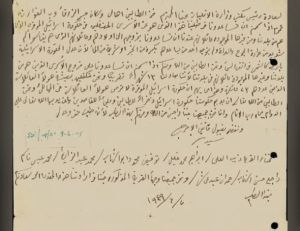
It should be noted that since 1924, Jisr az-Zarqa has witnessed numerous land confiscations. Authorities seized 12,000 dunams of its historical lands and confined the village’s residents to an area of only 1,566 dunams.
Second: The social siege
For decades, our people have suffered from difficult social conditions, exclusion, and marginalization by Israeli society—a marginalization fueled by preconceived ideas and the negative, inferior image portrayed by Hebrew media and government institutions.
The village also suffered years of exclusion from the Arab community, with limited social communication and cooperation between its residents and Palestinians in other towns, unlike the connections seen among communities in the Triangle, Galilee, and elsewhere. This exclusion was influenced by the negative stereotypes and the village’s geographical distance from major Arab population centers. However, this Arab exclusion of Jisr az-Zarqa has weakened in recent years.
Third: The economic siege
This is reflected in an extremely difficult and suffocating economic situation and severe poverty, with around 80% of families living below the poverty line. The village lacks industrial and commercial zones due to government policies, which residents describe as discriminatory.
Most residents are workers struggling for a dignified life with low wages. There is no strong economically established class, and there is an absence of Arab investors despite the village’s tourism and commercial potential due to its strategic and natural location. Limited resources among the local council and residents also prevent the establishment of commercial projects and small economic and tourism initiatives.
Fourth: The political siege
The Israeli government continues to implement policies and programs aimed at suppressing political, popular, and national activity in the village, as part of what it describes as “correcting the historical mistake” of leaving Jisr az-Zarqa on the coast in 1948.
The list includes political persecution of active youth and grassroots movements, isolating the village from Arab society and its national struggle, neglecting personal and public security through failure to seriously combat crime and violence, turning a blind eye to the spread of weapons among youth, and the spread of drugs amid the absence of effective enforcement. These circumstances contribute to instability, leaving citizens occupied with protecting their families and securing their livelihoods rather than engaging in social, political, and community action to change reality.
Fifth: The psychological and moral siege
This has resulted from the difficult reality experienced by the people of Jisr az-Zarqa and the policies of discrimination and restriction. Over the years, generations have lost hope for change; optimism has weakened, while frustration and pessimism have grown. The belief in the possibility of breaking the siege and achieving urban, cultural, educational, and economic revival has diminished.
A sense of inferiority and a negative self-image have also grown among residents, affecting self-confidence and their belief in their ability to improve their situation and overcome injustice.
In conclusion:
Breaking the siege means expanding the village, allocating new lands for construction, developing economic, commercial, and tourism opportunities, providing budgets and resources, improving education, and investing in people before buildings. It also means ending social exclusion, marginalization, discrimination, segregation policies, Judaization plans, and attempts to erase Palestinian presence on the coast.
Reality will not change and the siege will not be broken without a professional, political, and popular strategy based on organized and purposeful struggle. This requires unifying efforts among the local council, active community movements, activists, local associations, and residents, alongside national representative bodies, including the Higher Follow-Up Committee, national committees, and human rights organizations.
Protecting the existence of Jisr az-Zarqa—the last remaining Palestinian coastal village—is a national responsibility. The current stage requires a united struggle to break the siege and demands attention and solidarity from our leadership, society, media, and national institutions.
It is time to place Jisr az-Zarqa firmly on the agenda of the Higher Follow-Up Committee and not leave the enduring Palestinian presence, standing alone on the shore of the sea.
To read the article, click here.