Key Figures
Population Census
| Year | Arabs | Total |
|---|---|---|
| 1931 | 952 | 953 |
| 1944/45 | 1,490 | 1,490 |
Land Ownership (1944/45), in Dunams
| Year | Arabs | Jews | Public | Total |
| 1944/45 | 11,758 | 2,051 | 711 | 14,520 |
Land Use (1944/45), in Dunams
| Land Use | Arabs | Jews | Public | Total |
| Non-cultivable and built-up areas (total) | 4,852 | 816 | 527 | 6,195 (43%) |
| Cultivated / cultivable areas (total) | 6,906 | 1,235 | 184 | 8,325 (57%) |
Number of Houses (1931): 202
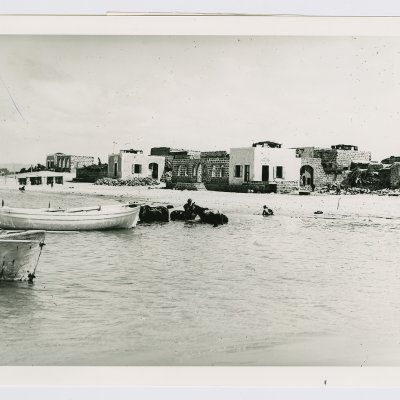
The village stood on a small hill rising slightly above the sandy beach surrounding it. A secondary road connected it to the coastal highway and linked it with Haifa and other urban centers. It also had a railway station serving the coastal line.
The village was established near the ruins of the famous Canaanite town of Dor. The name of this place first appeared in an inscription dating to the 13th century BCE, mentioning the Egyptian Pharaoh Ramses II. It also appears in a text written by Wen-Amun, an official at an Egyptian temple, dating to around 1100 BCE.
According to Wen-Amun, the Tjeker occupied the town. The Tjeker are believed to have been a Palestinian group that migrated to the area in the 12th century BCE. It is possible that Joshua conquered the town (Joshua 12:23). Like Strato’s Tower (see Caesarea, Haifa District), Dor was a Sidonian colony during the fourth century BCE. Around the late second century BCE, it was occupied by the Greeks, who sometimes called it Dora, and they fought the Hasmoneans, the rulers of the region. Dor apparently fell into abandonment after the fourth century CE. Some time later, the Crusaders built a fortress at Dora/al-Tantura called Merle (Merle).
When Napoleon attempted to extend his control over Palestine in the late 18th century, his retreating troops passed through the village and burned it in August 1799.
The British traveler J. Buckingham described it in 1821 as a small village with a small harbor and a khan. He stated that although al-Tantura was not completely deserted, the few remaining traces gave no indication of its former grandeur. In 1855, Mary Rogers, sister of the British consul in Haifa, reported that the village consisted of approximately 30 to 40 houses built of stone and mud or clay, and that cattle and goats formed the main source of al-Tantura’s wealth.
By the end of the 19th century, al-Tantura was described as a coastal village extending from north to south. Its harbor, built at the end of a square-shaped peninsula, was located immediately north of the village. The village also contained a square stone building used as a guesthouse, probably the khan mentioned by Buckingham. It had a population of 1,200 people, who cultivated 25 feddans (one feddan = 100–250 dunams). The village had limited commercial relations with Jaffa.
The stone houses of al-Tantura were built along the sandy shore. The village had an elementary school for boys, built around 1889, and another for girls, established in 1937/1938. The village economy depended on agriculture and fishing. During the Mandate period, fish production increased from 6 tons in 1928 to 1,622 tons in 1944. Grains, vegetables, and fruits were the main agricultural products. In 1944/1945, a total of 26 dunams were devoted to citrus and bananas, 6,593 dunams to grains, and 287 dunams to irrigated land or orchards, including 270 dunams of olive groves.
Underwater archaeological excavations conducted near the al-Tantura shore uncovered ship anchors dating to various periods in the history of the site. A Byzantine church was also discovered on the northern slopes of Tell al-Burj during 1979–1980. Since 1980, the Hebrew University has conducted annual excavations at this site. South of Khirbet al-Mazra’a are the remains of the Crusader fortress known as Casal de Châtillon, including a vaulted square tower. Additional archaeological remains have also been reported at Khirbet al-Durayhima, located northeast of the village.
Occupation and Displacement of Its Inhabitants
At the beginning of May 1948, al-Tantura was among the last remaining Arab villages along the coastal plain stretching from the Zikhron Ya’akov area, south of Haifa, to Tel Aviv. On May 9, a meeting was held between local Haganah intelligence officers and experts on Arab affairs to determine the fate of al-Tantura and several other villages. According to Israeli historian Benny Morris, the decision was to “expel the inhabitants or subdue them.”
The History of the War of Independence confirms that the decision was implemented in al-Tantura two weeks later, on the night of May 22–23, 1948, when the 33rd Battalion of the Haganah (the 3rd Battalion of the Alexandroni Brigade) attacked the village. The village fell after a brief battle, as, according to Morris, it had previously rejected Haganah surrender terms and chosen to fight.
Morris wrote that “it was clear that the commanders of the Alexandroni Brigade wanted the village emptied of its inhabitants, and that at least some of the inhabitants were expelled.” An Israeli military communiqué issued on May 23, 1948, and reported by The New York Times, stated that “hundreds of Arabs fell into our hands, along with large quantities of spoils.” The newspaper correspondent also reported the Haganah’s disputed claim that the village had been a point for smuggling Egyptian volunteers arriving in Palestine by sea.
The suffering of the inhabitants did not end with their expulsion. Some went to the Triangle area, while approximately 1,200 people were expelled to the neighboring village of al-Fureidis, which had already fallen. In late May, Israeli Minister of State Bechor Shalom Sheetrit asked Prime Minister David Ben-Gurion whether the inhabitants of al-Tantura should also be expelled from al-Fureidis.
Morris indicates that most of the inhabitants were expelled during the summer from territories under Israeli control, while approximately 200 people remained in al-Fureidis, most of them women and children whose male relatives were being held in Israeli detention. According to Morris, they were left exposed and without adequate clothing. He notes that some Israeli officials were concerned about what might happen to them during the winter, but provides no further information regarding their fate.
Israeli Settlements on the Village’s Land
In June 1948, Zionist immigrants from the United States and Poland established Kibbutz Nahsholim on the village’s land, northeast of its site. In 1949, Zionist immigrants from Greece established the settlement of Dor east of the site.
The Village Today
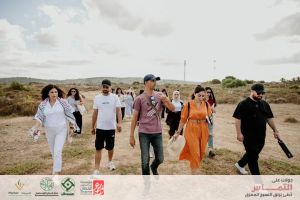
Only a shrine, a fortress, an old well, and a few houses remain of the village. One of the surviving houses, belonging to the al-Yahya family, was built in 1882, as indicated by an inscription visible on it. Numerous palm trees and some cactus plants grow throughout the site, which has been transformed into an Israeli park containing several swimming pools.
Source: The Interactive Encyclopedia of the Palestinian Question — PalQuest.