March 5, 2026
Return to Tantura is a new book by Jordanian researcher Ahmad Hassan Ali Al-Khudaysh, examining the Palestinian coastal village of Tantura through a comprehensive documentary study that combines meticulous research with the warmth of human storytelling. The book serves as a kind of historical sundial, bringing back the history of the village before the 1948 Nakba.
Challenging Zionist Claims
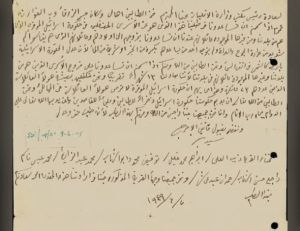
The book directly challenges Zionist claims that the land was empty of inhabitants. The researcher draws on Ottoman tax receipts and official records documenting the ownership of Tantura’s lands by its residents and their longstanding settlement there, dating back decades before Ibrahim Pasha’s campaign in the nineteenth century.
The book also provides a detailed list of 128 Palestinian victims from the village, documenting their full four-part names in an effort to preserve their historical legacy.
The Book’s Chapters: A Journey Through Time and Place
The work is divided into three main sections, forming a concise encyclopedia of the village:
Part One — The Tantura Sundial:
This section traces the village’s history and geographical routes, its architecture and demographics, as well as the history of its harbor and educational institutions. It also devotes a documentary section to the Tantura Massacre, drawing on what the author describes as reliable testimonies, with the aim of recording the events and strengthening historical awareness.
Part Two — Records and Genealogies:
This section focuses on the origins and genealogies of Tantura’s families, drawing on population registers from 1911–1914 to help younger generations reconnect their present with their past.
Part Three — Historical Documents:
The author examines archival materials, presenting newspaper clippings—including reports from Al-Difa’ newspaper—as well as geographical maps showing the village’s facilities and the homes of its residents before the destruction of the village.
The Language of Memory and Resistance
The researcher explains that the work is not merely a visit to a physical place, but an evocation of a memory that has never disappeared. It opens a gateway through which the vocabulary of the past can be reconstructed as it should be.
Tantura, he argues, is not merely a place. It is a mirror of the human spirit, holding memories of joy, fear, and longing. For those who knew it, it remains a cherished home; for those who only heard of it, it is a lost paradise.
Research Conclusion
The researcher concludes by emphasizing that Tantura remains alive in collective memory and conscience, and that the documents gathered in the book represent an attempt to fill gaps in the village’s historical and geographical record after its destruction during the Nakba.
The village, he argues, has remained present in the records of history and in the pursuit of truth.
Source: Al Jazeera