Jisr az-Zarqa – The results of an opinion survey conducted by the Jisr az-Zarqa Heritage Center among participants in the cultural evening celebrating the publication of “Jisr az-Zarqa – Testimonies Confronting Narratives” by authors Samir Abu al-Hayja and Sami al-Ali revealed a high level of satisfaction and engagement. This is a clear indication of the village community’s eagerness for more cultural evenings that strengthen awareness of local memory and narratives.
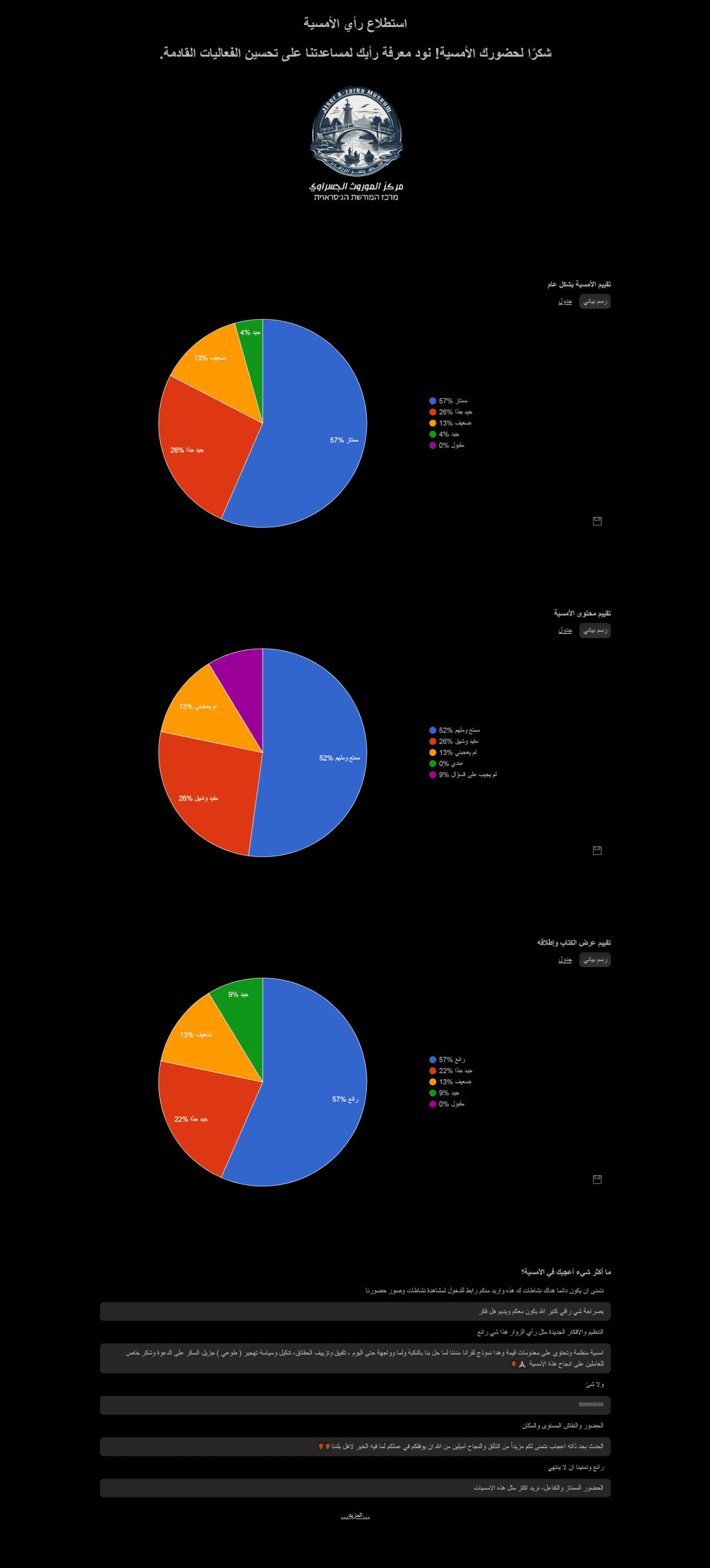
The survey results showed that 57% of participants rated the evening as excellent, while 26% described it as very good. Thirteen percent considered it weak, while 4% indicated that it was partially good, with no negative rating recorded. The results also showed that 52% rated the content of the evening as excellent, 26% as very good, and 13% as weak, while 9% indicated that there was room for improvement.
Regarding the organization of the evening, 57% of participants rated it as excellent, 22% as very good, 13% as weak, and 9% as partially good, reflecting clear success on both the professional and organizational levels.
In the open-ended comments section, participants expressed their strong appreciation for the event. They emphasized its importance in documenting the history of the village and strengthening a sense of belonging, and called for more similar cultural activities. Several participants also noted that the evening provided a rare and necessary space for hearing the local narrative and promoting cultural dialogue, emphasizing that the village is eager for such initiatives, which restore collective memory to its rightful place and give it a living presence in the public sphere.
The administration of the Jisr az-Zarqa Heritage Center commented on the results, saying: “The evening was not merely a passing cultural event, but rather a pivotal milestone reflecting the growing level of community awareness and highlighting the urgent need for sustained cultural activity in Jisr az-Zarqa—activity that strengthens identity, preserves the narrative, and opens new horizons for future generations.”
The Center’s administration further emphasized that distributing the survey through a digital link following the event was part of its commitment to listening to the audience’s views and professionally evaluating the experience, while using the feedback to develop future cultural initiatives and strengthen the role of culture as a fundamental driver for preserving history and building community awareness.