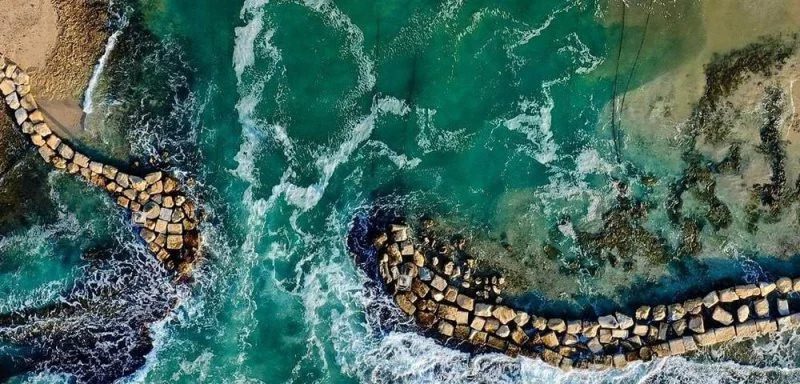
A story of a resilient Arab village on the seashore!
This exhibition, with its various sections, tells us the true story of the village of Jisr az-Zarqa.
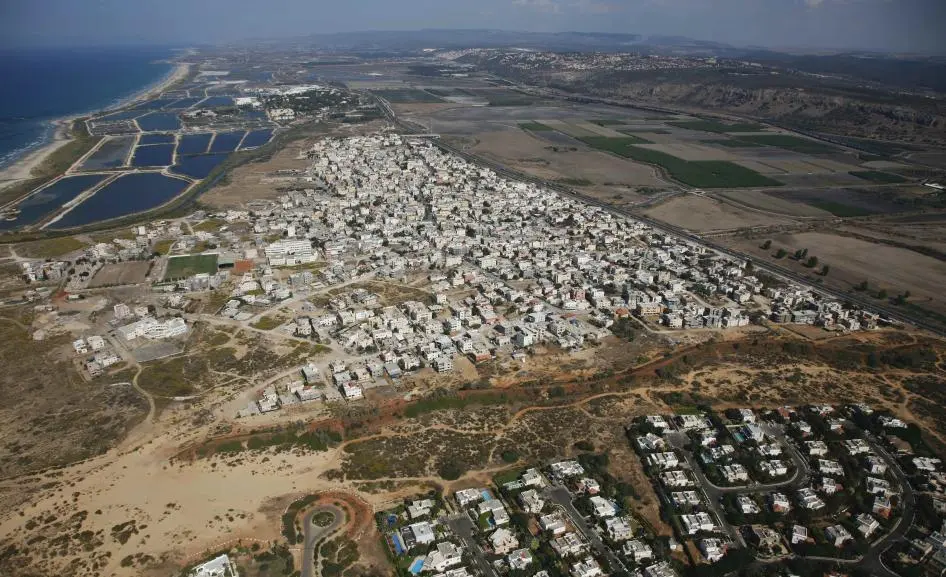
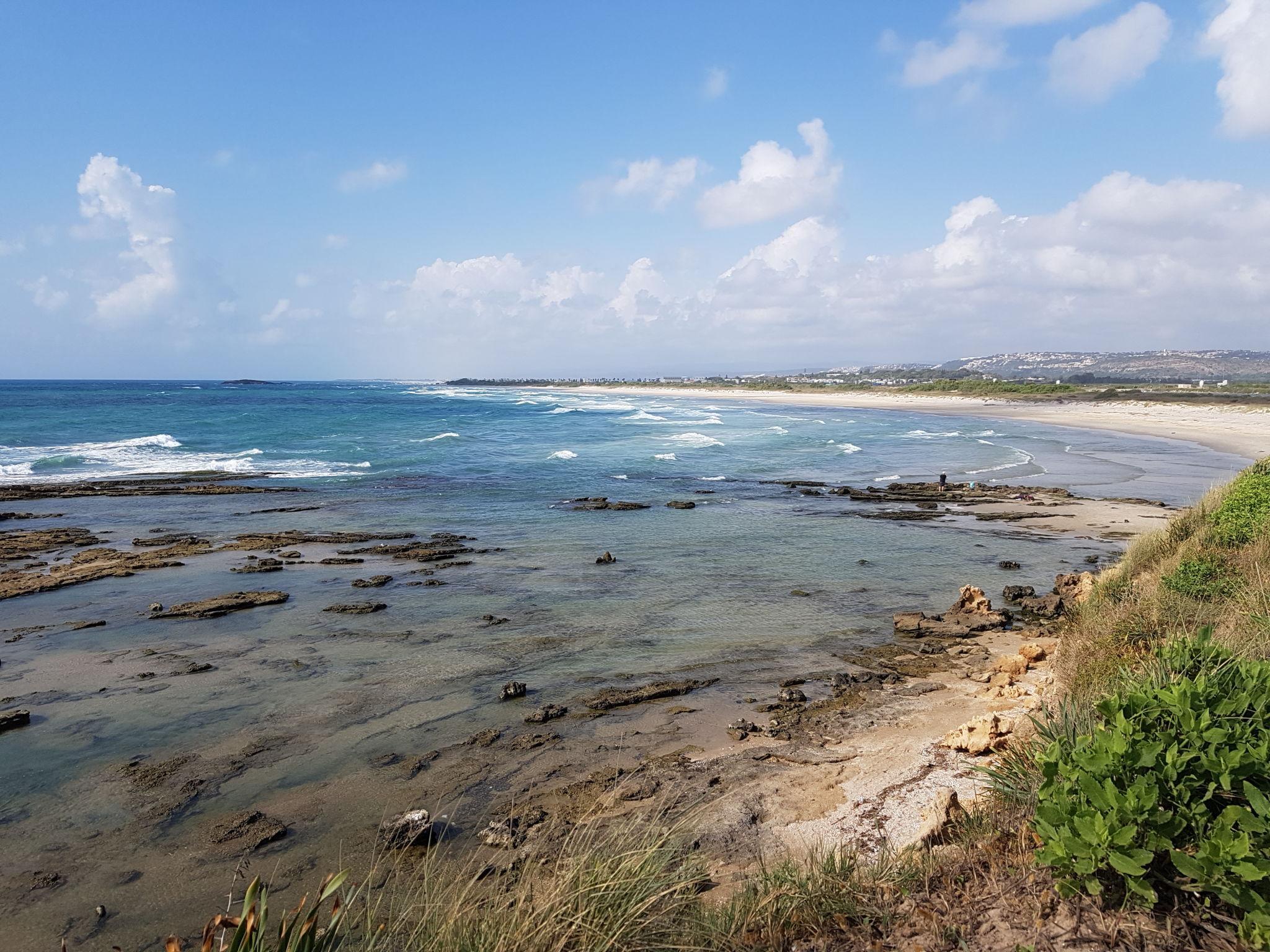
The story begins hundreds of years ago, when Jisr az-Zarqa enjoyed vast and expansive lands of approximately 12,000 dunams. Its borders then extended to the Carmel mountain range in the east, the sea in the west, the Roman water canal and “Arab al-Barra” in the south—Arab families who lived outside the walls of Caesarea, and were therefore called Arab al-Barra (barra = outside). In the north, its borders reached as far as Tantura, as evidenced by the cemetery that still exists today in Kibbutz Ma’agan Michael.
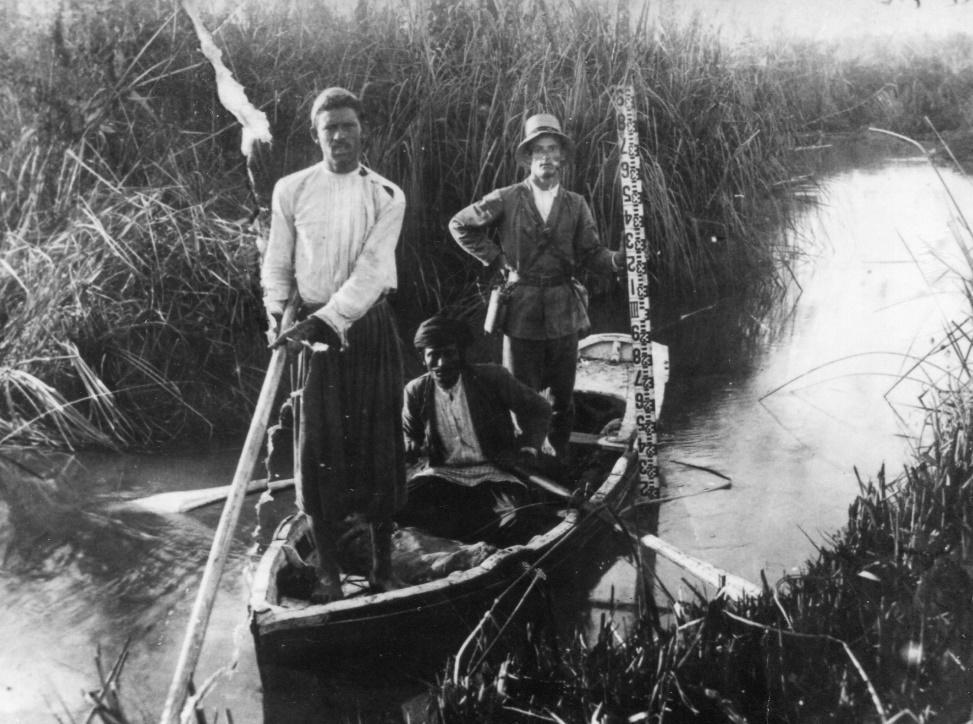
Families arrived in Jisr az-Zarqa from different places and at different times. The village was known then as “Arab al-Ghawarina,” not in reference to the Jordan Valley (Ghor al-Urdun) as some have claimed, but rather due to the topographical region they inhabited—the “ghor,” meaning any low-lying land. When we speak of the Ghor of Jisr az-Zarqa, we are referring to a flat plain full of swamps (the Kabara swamps).
Some of the families in Jisr az-Zarqa arrived with Ibrahim Pasha’s campaign, such as the Rashwan family. Another part is of Palestinian origin, while a third group arrived after the displacement of 1948, such as the Abu Nada family displaced from Tantura and the Abu Zard family from Ijzim.
The two largest families in Jisr az-Zarqa are of Palestinian origin: Amash and Jarban. This confirms the presence of Arab al-Ghawarina many years before the arrival of Baron Rothschild to the area. These families lived in the swamp region, which was later drained decades after their settlement. They also lived in the Kabara area (the Carmel slopes) and at the “Bridge of the Seven Mills,” which is the site of the village today, near what is known as Abu al-Nour mill, whose remains still exist today in the northwestern part of Binyamina.
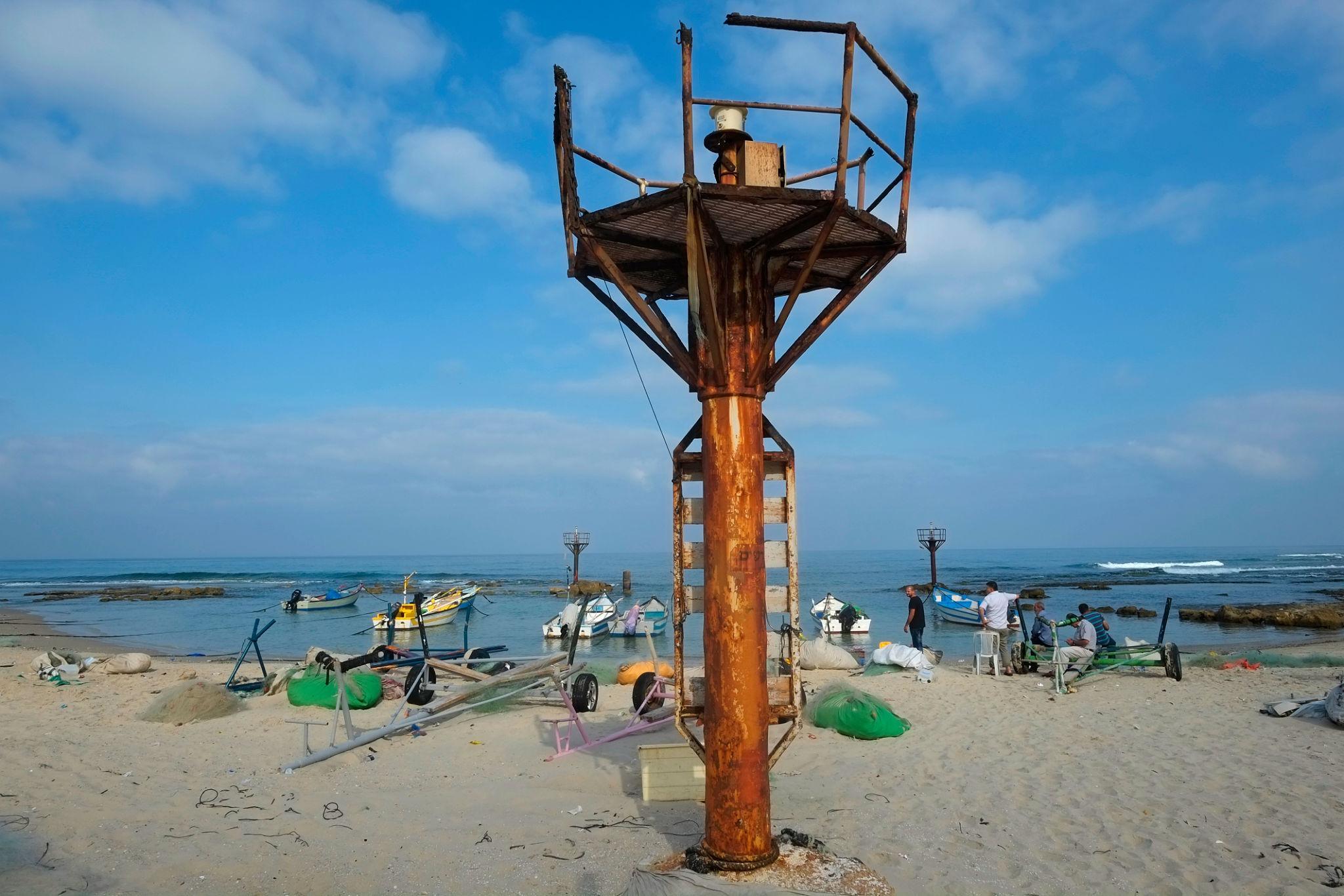
As these families met in the area, a social fabric began to form and a community emerged, characterized by a diverse local dialect. Economically, each family specialized in certain professions depending on its location: the Amash family traditionally raised buffalo and practiced agriculture, while the Jarban family engaged in hunting on land and sea due to their proximity to the coast. Other families worked in farming, pottery, and used plants such as reeds, cane, and other marsh vegetation to make baskets, brooms, mats, and household tools. The community was marked by a lack of cultural and social hierarchy, meaning all residents shared a low socio-economic status.
In winter, families living in the swamp areas would move to the kurkar ridge where Jisr az-Zarqa stands today, due to rising water levels and harsh living conditions.
The name “Jisr az-Zarqa” reflects its ancient history. Some believe it refers to the Ottoman bridge (William’s Bridge), but that bridge was built in 1898, decades after local residents were already living there. In reality, the name derives from the Ottoman “Bridge of the Mills,” which was in fact a Roman dam built by Herod to channel flowing water to the ancient city of Caesarea. Later, in the Byzantine era, the dam was used for the first flour mill, and during the Ottoman period six additional mills were added, hence it became known as the “Bridge of the Seven Mills.”
The presence of water, mills, and wheat attracted many families to settle nearby, forming the village of Jisr az-Zarqa. Remains of these houses still exist today, along with the historic Sheikh Salem cemetery in Kibbutz Ma’agan Michael, for which residents of Jisr az-Zarqa hold an Ottoman deed confirming ownership.
The name “Zarqa” refers to Wadi al-Zarqa, the Arabic name of what is today called Wadi Tanninim (“Crocodile Stream”), whose waters are known for their deep blue color. It is worth noting that until the 1980s, Jisr az-Zarqa did not appear on Israeli maps, while Nahal Tanninim did, even though the village is mentioned in the Palestinian Encyclopedia and appears clearly in Ottoman and British maps.
In the late 19th century and with the beginning of intensive Zionist immigration to Palestine, Jisr az-Zarqa families, like other Palestinian families, faced land ownership issues. Most did not formally register their land to avoid taxes and Ottoman military conscription. Some lands were registered under Lebanese aristocrats, while others were communal Ottoman lands.
With the arrival of Baron Rothschild at the beginning of the 20th century, it is said he stood on Mount Carmel observing the simplicity of the Ghawarina Arabs. Due to widespread malaria caused by the swamps, settlement and agriculture were difficult. Therefore, the PICA company was established and a project to drain the swamps began. This marked the first Nakba of Arab al-Ghawarina, when most of their lands were confiscated—about 26 years before the 1948 Nakba. The Zionist movement and the British Mandate recognized only about 1,566 dunams for them (later Jisr az-Zarqa), while the rest of their land in Kabara and the swamps was taken for settlement and drainage projects.
In 1948, a second catastrophe occurred when they were expelled from northern lands of Jisr az-Zarqa to establish Kibbutz Ma’agan Michael.
During swamp drainage, the PICA company initially preferred Jewish laborers, but malaria affected them severely, leading to many deaths. The Baron then turned to local workers. The Arab al-Ghawarina had immunity to malaria, later understood by medical research to be linked to a genetic trait (sickle cell trait) that helps resist the disease.
Arab labor proved effective in draining the swamps, and local residents began interacting with neighboring villages such as Binyamina and Zikhron Ya’akov, as well as around 40 depopulated villages from Jisr az-Zarqa to Haifa, including al-Shuna, Umm al-‘Alak, Sabbarin, Zmarin, Tantura, and Kafr Lam.
The Baron did not grant the people of Jisr az-Zarqa their current lands as a “goodwill gesture,” nor did they come from the Jordan Valley or Sudan as some narratives claim.
“We are not guests in our own land.”
“We were here before the Baron!”
Written by: Samah Eid
Based on oral history, sources, and documents about Jisr az-Zarqa
Linguistic review: Dr. Kawthar Jaber
Historical review: Mohammed Hamdan Amash & Sami al-Ali
Curator of the museum: Narjes Athamneh